Bosra Roman Theatre: An Epic of Basalt, Voice and Eternity
مسرح بصرى الروماني: ملحمة البازلت والصوت والخلود
An architect sits in the black basalt theatre of Bosra and asks what remains of a voice once the audience has gone.
By Architect Imad Darouich8 min read
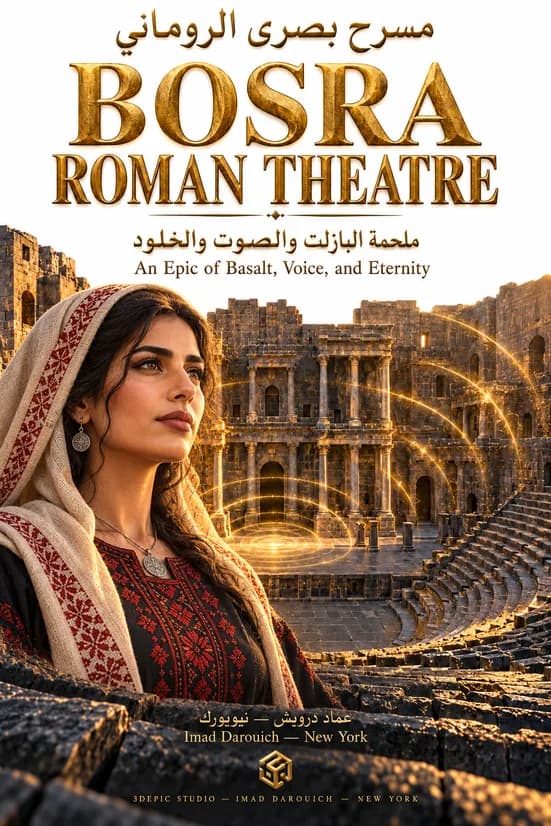
The Roman Theatre at Bosra, in southern Syria, was built of black basalt in the second century CE, seats about 17,000 people and was later enclosed by an Ayyubid fortress; the ancient city has been a UNESCO World Heritage Site since 1980. Imad's Bosra Roman Theatre reads it as an architect in ten chapters: the basalt, the geometry that carries a voice, the fortress, the empty tiers at night and the audience that returned.
Introduction
المقدمة
أنا معماري، وحين أقف أمام مسرح بصرى لا أرى أطلالًا رومانية فقط.I am an architect, and when I stand before the Roman Theatre of Bosra, I do not see merely Roman ruins.
أرى فكرةً معمارية قاومت ألفي عام.I see an architectural idea that has resisted two thousand years.
أرى حجرًا أسود استطاع أن يحتفظ بالصوت.I see black stone that somehow learned to preserve sound.
وأرى مدرجات فارغة ما زالت تنتظر جمهورها.I see empty tiers that still seem to await their audience.
هنا يصبح البازلت أكثر من مادة بناء.Here, basalt becomes more than a building material.
يصبح ذاكرة.It becomes memory.
ويصبح المسرح أكثر من مبنى.And the theatre becomes more than a building.
يصبح حوارًا بين الإنسان والزمن.It becomes a dialogue between humanity and time.
Chapter One: When the Romans Chose Black Stone
الفصل الأول: حين اختار الرومان الحجر الأسود
في بصرى، الأرض نفسها اقترحت مادة العمارة.In Bosra, the earth itself offered the material of architecture.
البازلت الأسود كان حاضرًا في المكان.Black basalt was already present in the land.
ثقيلًا، صلبًا، داكنًا.Heavy, strong, and dark.
لكن يد المعماري رأت فيه أكثر من حجر.But the architect’s hand saw more than stone within it.
رأت جدارًا.It saw a wall.
ومقعدًا.A seat.
وقوسًا.An arch.
ومسرحًا كاملًا.An entire theatre.
وهنا أجد درسًا أحبه في العمارة.Here I find a lesson I love in architecture.
المادة لا تكون فقيرة أو غنية بذاتها.A material is not poor or rich in itself.
المعماري هو الذي يمنحها لغتها.The architect gives it its language.
وفي بصرى تكلم البازلت.And in Bosra, basalt spoke.
Chapter Two: Fifteen Thousand Faces
الفصل الثاني: خمسة عشر ألف وجه
أتخيل المسرح ممتلئًا.I imagine the theatre filled.
آلاف الوجوه تصعد فوق بعضها في المدرجات.Thousands of faces rise above one another across the tiers.
طفل بجانب أبيه.A child beside his father.
تاجر أغلق متجره وجاء.A merchant who closed his shop and came.
جندي يبحث عن ساعات قليلة بعيدًا عن الحرب.A soldier seeking a few hours away from war.
امرأة تنتظر بداية العرض.A woman waiting for the performance to begin.
لا أعرف أسماءهم.I do not know their names.
لكن المقاعد عرفت أجسادهم.But the seats knew their bodies.
والحجر سمع أصواتهم.And the stone heard their voices.
بعد ألفي عام اختفت الوجوه.Two thousand years later, the faces are gone.
وبقيت المقاعد.The seats remain.
وهنا أشعر بقسوة العمارة وجمالها معًا.Here I feel both the cruelty and beauty of architecture.
المبنى قد يعيش أطول من الذين بنوه.A building may outlive those who built it.
Chapter Three: The Architecture of Sound
الفصل الثالث: هندسة الصوت
المسرح لا يُرى فقط.A theatre is not only seen.
المسرح يُسمع.A theatre is heard.
وهذا ما يجعلني أتأمله كمعماري.This is what makes me contemplate it as an architect.
كيف يصل صوت الإنسان إلى آلاف الناس؟How does a human voice reach thousands of people?
من دون مكبرات.Without loudspeakers.
ومن دون أجهزة إلكترونية.Without electronics.
الحل كان في الهندسة.The answer was geometry.
في الميل.In the slope.
وفي المسافة.In distance.
وفي توزيع المقاعد.In the arrangement of seats.
وفي العلاقة بين الخشبة والجمهور.In the relationship between stage and audience.
هنا لم تكن الهندسة رسمًا على ورق.Here geometry was not merely drawing on paper.
كانت آلةً تحمل الصوت.It was an instrument carrying sound.
Chapter Four: The Theatre Within the Fortress
الفصل الرابع: المسرح داخل الحصن
أكثر ما يدهشني في بصرى أن الزمن لم يترك المسرح كما بدأ.What fascinates me in Bosra is that time did not leave the theatre as it began.
جاءت عصور أخرى.Other eras arrived.
وتغيرت الحاجات.Needs changed.
وأُحيط المسرح بتحصينات.The theatre became surrounded by fortifications.
صار الفن محاطًا بالدفاع.Art became enclosed by defense.
والمكان الذي خُلق للصوت أصبح جزءًا من بنية للحماية.The place created for performance became part of a structure of protection.
وهنا تتجسد أمامي طبيعة التاريخ.Here, the nature of history becomes visible to me.
المبنى لا يعيش حياة واحدة.A building does not live only one life.
قد يولد مسرحًا.It may be born a theatre.
ثم يصبح حصنًا.Then become a fortress.
ثم أثرًا.Then a monument.
ثم يعود مكانًا للفن.Then return again to art.
Chapter Five: The Stage That Did Not Die
الفصل الخامس: الخشبة التي لم تمت
أتخيل ممثلًا يقف في منتصف الخشبة.I imagine an actor standing at the center of the stage.
يصمت لحظة.He pauses for a moment.
أمامه آلاف العيون.Thousands of eyes face him.
ثم يتكلم.Then he speaks.
الكلمة تخرج من جسد صغير.The word leaves a small human body.
لكن العمارة تكبرها.Architecture enlarges it.
تحملها إلى أعلى المدرجات.It carries it toward the highest tiers.
وهنا أفهم لماذا احتاج الإنسان إلى المسرح.Here I understand why humanity needed theatre.
لأنه أراد أن يرى نفسه من الخارج.Because humanity wanted to see itself from the outside.
أن يرى خوفه ممثلًا أمامه.To see its fear performed before it.
وحبه.Its love.
وطموحه.Its ambition.
وخطأه.Its mistakes.
المسرح مرآة جماعية.The theatre is a collective mirror.
Chapter Six: Night in Bosra
الفصل السادس: الليل في بصرى
أتخيل المسرح بعد رحيل الجمهور.I imagine the theatre after the audience has gone.
لا أحد على المقاعد.No one sits in the seats.
ولا ممثل فوق الخشبة.No actor stands upon the stage.
يبقى الحجر وحده.Only the stone remains.
والسماء فوقه.And the sky above it.
في تلك اللحظة أشعر أن المسرح يصبح أكثر قوة.At that moment, I feel the theatre becoming more powerful.
لأن الصمت يكشف حجم المكان.Because silence reveals the scale of the place.
النهار يعرض العمارة.Day displays architecture.
أما الليل فيكشف روحها.Night reveals its soul.
وفي سواد البازلت يصبح الليل امتدادًا للمبنى.Within the darkness of basalt, night becomes an extension of the building.
Chapter Seven: Bosra Within History
الفصل السابع: بصرى مدينة داخل التاريخ
لا يمكن أن أفصل المسرح عن بصرى.I cannot separate the theatre from Bosra.
ولا بصرى عن طرق التجارة والحضارات التي عبرتها.Nor Bosra from the trade routes and civilizations that passed through it.
هذه ليست عمارة معزولة.This is not isolated architecture.
إنها جزء من مدينة عاشت طبقات من التاريخ.It is part of a city that lived through layers of history.
الرومان مروا.The Romans passed.
وجاءت عصور أخرى.Other eras followed.
وتغيرت اللغات والسلطات والحدود.Languages, powers, and borders changed.
لكن الحجر بقي يسجل التحولات بصمته.Yet the stone continued recording these transformations in silence.
أنا أحب المدن التي تستطيع أن تحمل أكثر من زمن في جدار واحد.I love cities capable of carrying more than one age within a single wall.
وبصرى واحدة منها.Bosra is one of them.
Chapter Eight: When the Audience Returned
الفصل الثامن: حين عاد الجمهور
بعد قرون من الصمت، عاد الفن إلى المسرح.After centuries of silence, art returned to the theatre.
عاد الناس إلى المقاعد.People returned to the seats.
وعادت الموسيقى والأصوات والعروض إلى المكان.Music, voices, and performances returned to the space.
بالنسبة لي، هذه لحظة مؤثرة.For me, this is a moving moment.
لأن أفضل حماية للمبنى التاريخي ليست دائمًا أن نجعله صامتًا.Because the best protection for a historic building is not always to make it silent.
أحيانًا نحميه بأن نعيد إليه بعضًا من وظيفته.Sometimes we protect it by returning part of its function.
أن يسمع المسرح صوتًا من جديد.To let the theatre hear a voice again.
أن يرى جمهورًا جديدًا.To let it see a new audience.
أن يشعر أن ألفي عام لم تحوله إلى جثة حجرية.To let it feel that two thousand years have not turned it into a stone corpse.
Chapter Nine: What Basalt Taught Me
الفصل التاسع: ما علّمني البازلت
أنا معماري، ولذلك أسأل الحجر أسئلة كثيرة.I am an architect, and therefore I ask stone many questions.
كيف بقيت؟How did you remain?
كيف تحملت المطر والشمس والبرد والحرب؟How did you endure rain, sun, cold, and war?
كيف بقيت أقواسك واقفة؟How did your arches remain standing?
لكن البازلت لا يجيب بالكلمات.But basalt does not answer with words.
يجيب بالبقاء.It answers by remaining.
وهذه إجابة تكفي.And that answer is enough.
علمني بصرى أن العمارة القوية ليست التي تبدو قوية يوم افتتاحها.Bosra taught me that powerful architecture is not architecture that merely looks strong on opening day.
بل التي يستطيع الزمن أن يختبرها ولا يمحو معناها.It is architecture that time can test without erasing its meaning.
Chapter Ten: When Stone Becomes Voice
الفصل العاشر: حين يصبح الحجر صوتًا
أعود في النهاية إلى السؤال الأول.In the end, I return to my first question.
ما الذي بقي من أول عرض قُدّم هنا؟What remains of the first performance given here?
الممثل رحل.The actor is gone.
والجمهور رحل.The audience is gone.
والحاكم رحل.The ruler is gone.
والإمبراطورية نفسها رحلت.The empire itself is gone.
لكن المسرح بقي.But the theatre remained.
وهنا تصبح العمارة ذاكرةً تتجاوز أصحابها.Here architecture becomes a memory greater than its makers.
الممثل كان يملك صوته لساعة.The actor possessed his voice for an hour.
أما المسرح فحفظ فكرة ذلك الصوت قرونًا.The theatre preserved the idea of that voice for centuries.
وهذه هي عظمة بصرى بالنسبة لي.This is the greatness of Bosra for me.
ليست عظمتها في حجمها وحده.Its greatness is not merely in its size.
ولا في قدمها وحده.Nor merely in its age.
بل في قدرتها على جعل الغائب حاضرًا.It lies in its ability to make the absent present.
Conclusion
الخاتمة
يا مسرح بصرى، أقف أمامك كمعماري وأسأل نفسي: ماذا سيبقى مما نبنيه نحن؟O Theatre of Bosra, I stand before you as an architect and ask myself: what will remain of what we build today?
بعد مئة عام، من سيتذكر أسماءنا؟After a hundred years, who will remember our names?
وبعد ألف عام، ماذا سيبقى من أبنيتنا؟After a thousand years, what will remain of our buildings?
ربما لا شيء.Perhaps nothing.
ولهذا تعلمني التواضع.That is why you teach me humility.
فالمعماري يضع الحجر ثم يرحل.The architect places the stone and then departs.
والعامل يرفع الجدار ثم يرحل.The worker raises the wall and then departs.
والممثل يقول كلمته ثم يرحل.The actor speaks his line and then departs.
والجمهور يصفق ثم يرحل.The audience applauds and then departs.
ويبقى المكان وحده يحمل أثر الجميع.Only the place remains, carrying the trace of them all.
لهذا لا أراك حجرًا أسود.That is why I do not see you as black stone.
أراك ذاكرةً لها شكل.I see you as memory given form.
وصمتًا ما زال يحمل صدى الإنسان.And silence that still carries the echo of humanity.
يا بصرى، لقد تغيرت الإمبراطوريات وبقيت مقاعدك.O Bosra, empires have changed, yet your seats remain.
تغيرت اللغات وبقيت أقواسك.Languages have changed, yet your arches remain.
وتغير الجمهور، لكن حاجة الإنسان إلى الفن لم تتغير.Audiences have changed, but humanity’s need for art has not.
وهذا هو الخلود الذي أفهمه كمعماري.This is the eternity I understand as an architect.
ليس أن يبقى الإنسان.Not that the human being remains.
بل أن يترك وراءه معنى يستحق البقاء.But that he leaves behind a meaning worthy of remaining.
The same stone and stage are the subject of The Roman Theater of Bosra: The Black Stone That Learned to Carry Sound, and a Roman theatre on the Syrian coast fills The Roman Theater of Jableh: The Epic of Stone That Learned to Sing. Both books are in the buildings and cities collection.
Written by
Architect Imad Darouich
المهندس المعماري عماد درويش
Architect, author and founder of 3DEPICS, based in New York. He writes epic literature that crosses borders, languages and geographies, where philosophy meets architecture, spirituality meets history and memory meets imagination.