The Bauhaus Manifesto: From Gropius's Principles to Villa Tugendhat
بيان الباوهاوس
Five principles of the Bauhaus manifesto, from the unity of art and craft to design for the people, and the buildings and objects they produced.
By Architect Imad Darouich4 min read
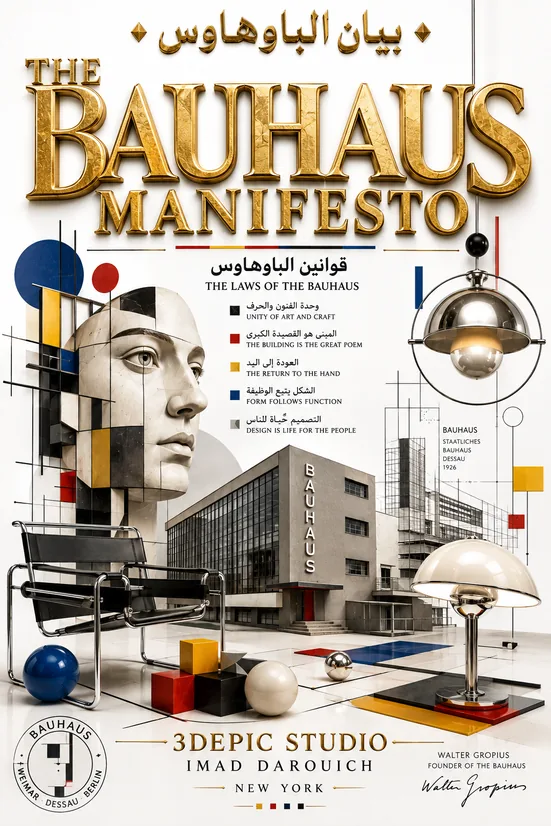
Walter Gropius published the Bauhaus manifesto in Weimar in 1919, calling on architects, sculptors and painters to return to the crafts and build together. Imad's poem on Bauhaus principles sets out five of them, the unity of art and craft, the building as the great poem, the return to the hand, form following function and design for the people, then follows them into the Bauhaus building in Dessau, Villa Tugendhat, the Wassily Chair and Marianne Brandt's lamps.
المقدّمة
Introduction
في عامٍ خرج من رحم الحرب،In a year born from the womb of war,
والأرض ما زالت تئنّ من الركام،While the earth was still groaning beneath the ruins,
وقف والتر غروبيوس كحكيمٍ يكتب بيانًا،Walter Gropius stood like a sage, writing a manifesto,
لا ليكون خطابًا عابرًا،Not to create a passing declaration,
بل ليصبح دستورًا لأعظم مدرسة،But to establish a constitution for one of the greatest schools
شهدها القرن العشرون: الباوهاوس.The twentieth century would witness: the Bauhaus.
مدرسة لم تُولد في قاعةٍ جامدة،A school that was not born in a rigid classroom,
بل في حلمٍ أراد أن يجمع شتات الفنون،But in a dream determined to reunite the scattered arts,
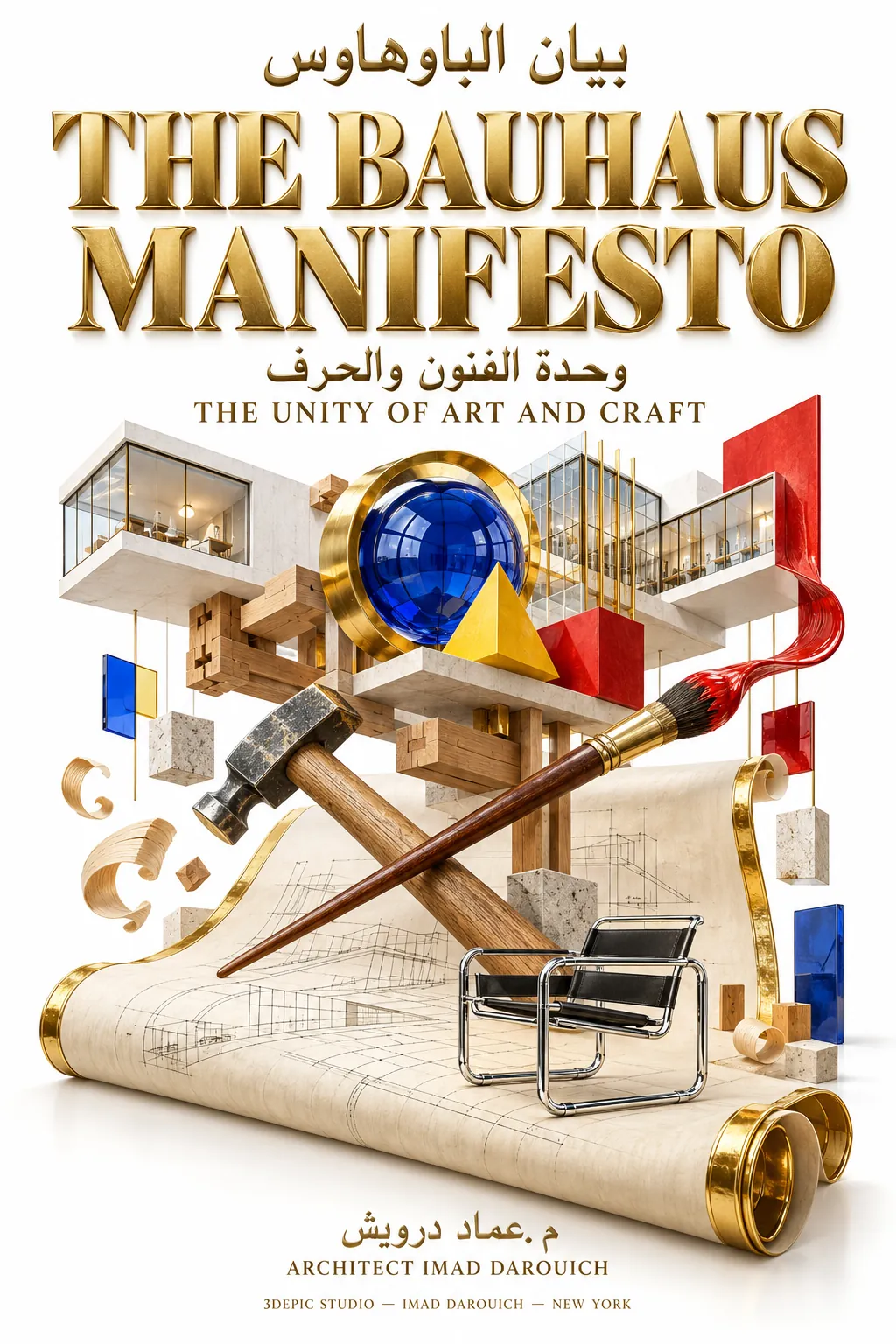
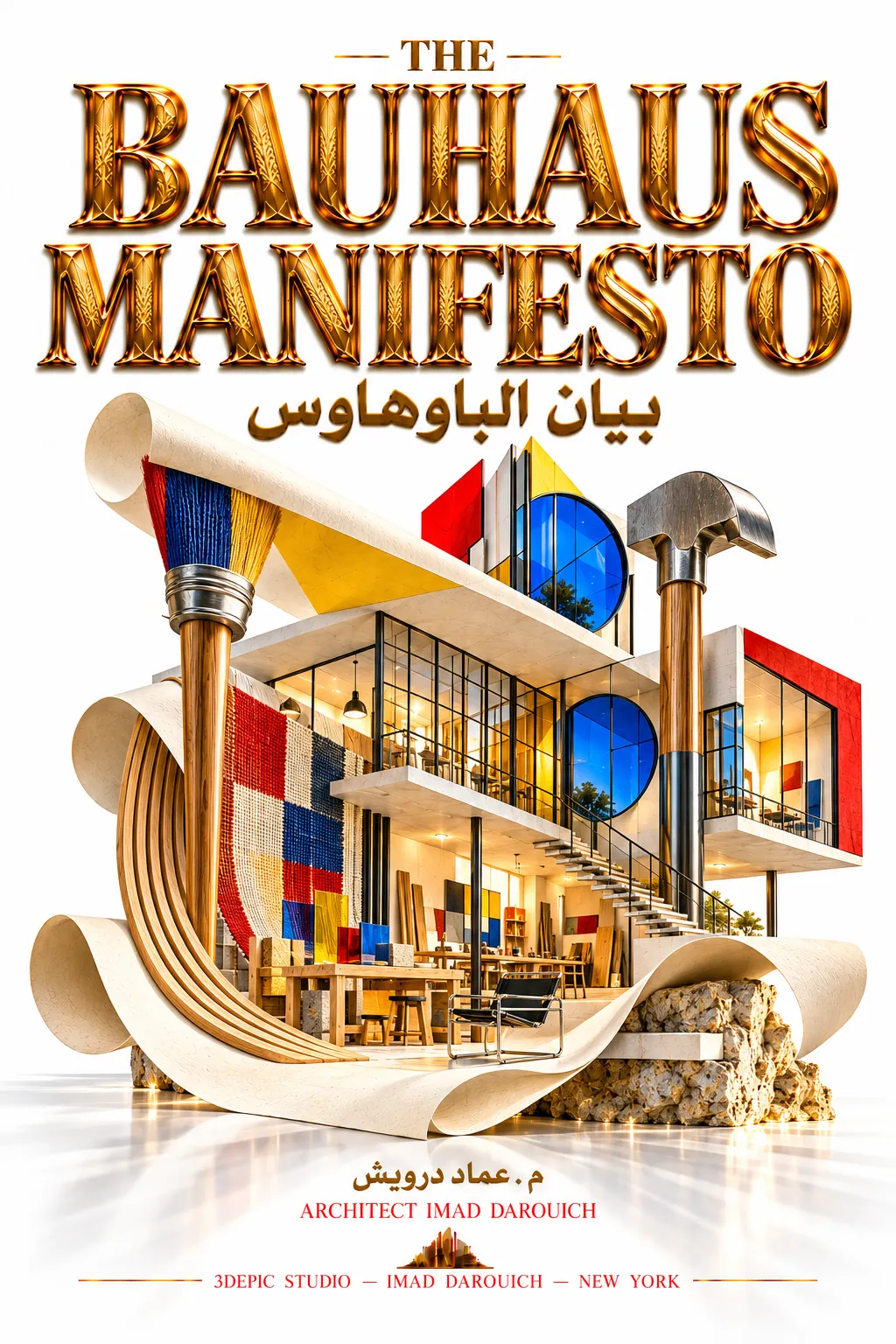
أن يجعل من المطرقة والريشة،To bring the hammer and the brush together,
ومن الزجاج والخشب،Glass and wood,
ومن اللون والخط،Color and line,
أوركسترا واحدة تعزف نشيد المستقبل.Into one orchestra playing the anthem of the future.
1. The Unity of Art and Craft
١. وحدة الفنون والحِرَف
قال البيان:The manifesto declared:
لا حدود بين فنٍّ وحرفة.There are no boundaries between art and craft.
فالنجّار حين يقطع الخشب،When the carpenter cuts wood,
هو رسّامٌ يخطّ لوحة.He becomes a painter composing a canvas.
والحدّاد حين يطرق الحديد،When the metalworker strikes iron,
كأنه ينحت تمثالًا من لهب.He seems to sculpt a statue from flame.
والمعماري حين يرسم خطًا على الورق،And when the architect draws a line upon paper,
كأنه يكتب بيتًا من الشعر.It is as though he were writing a verse of poetry.
2. The Building Is the Great Poem
٢. المبنى هو القصيدة الكبرى
قال البيان:The manifesto declared:
المبنى ليس حجارةً صامتة.A building is not silent stone.
بل قصيدة من زجاج وحديد.It is a poem of glass and steel.
قصيدة يتناغم فيها الكرسي مع النافذة،A poem where the chair harmonizes with the window,
والممر مع الضوء،And the corridor converses with light,
كأنّ كل تفصيل بيتٌ من ملحمة،As though every detail were a verse within an epic,
لا تكتمل إلا حين يجتمع الكل في الكل.Completed only when every part becomes part of the whole.
3. The Return to the Hand
٣. العودة إلى اليد
قال البيان:The manifesto declared:
المعرفة لا تُقرأ فقط، بل تُلمَس.Knowledge is not merely read; it is touched.
ضع يديك في الطين.Place your hands in the clay.
دع أصابعك تحاور الخشب.Let your fingers converse with wood.
دع المطرقة تكتب قصيدتها على الحديد.Let the hammer write its poem upon iron.
فالفكر لا يكتمل إلا حين يتعرّق في اليد.For thought is incomplete until it sweats through the hand.
4. Form Follows Function
٤. الشكل يتبع الوظيفة
قال البيان:The manifesto declared:
لا زخرفة بلا روح.No ornament without spirit.
لا قناع بلا وجه.No mask without a face.
فالخط المستقيم صدق.The straight line is honesty.
والمربع عدل.The square is balance.
والدائرة حنين.The circle is longing.
والبساطة أكثر جمالًا،And simplicity possesses greater beauty
من ألف زخرفةٍ تخدع العين.Than a thousand ornaments that deceive the eye.
5. Design Is Life for the People
٥. التصميم حياةٌ للناس
قال البيان:The manifesto declared:
ليست الجدران للنخبة وحدها.Walls do not belong to the elite alone.
بل للجميع.They belong to everyone.
صمّم للطفل كرسيًا.Design a chair for the child.
وللعامل نافذة.A window for the worker.
وللمدرّس مكتبًا.A desk for the teacher.
وللأم مطبخًا.A kitchen for the mother.
كأنك تصمّم للوطن بكامله.As though you were designing for an entire nation.
Living Examples: From Manifesto to Architecture
أمثلة حيّة: من البيان إلى الأبنية
ومن رحم هذه القوانين، وُلدت روائع.From the womb of these principles, masterpieces were born.
The Bauhaus Building in Dessau: 1926.
مبنى الباوهاوس في ديساو: 1926.
تحفة والتر غروبيوس.A masterpiece by Walter Gropius.
حيث الجدران الزجاجية تتنفّس الضوء كالقصيدة.Where glass walls breathe light like poetry.
وحيث الورشة جزءٌ من المعمار.Where the workshop becomes part of the architecture.
والطالب يعيش داخل حلمه.And the student lives inside the dream.
Villa Tugendhat: 1930.
فيلا توغندهات: 1930.
للودفيغ ميس فان دير روه.By Ludwig Mies van der Rohe.
بيتٌ من زجاج وفولاذ.A house of glass and steel.
شفافيته كأنها مرآة الروح.Its transparency resembles a mirror of the soul.
وبساطته كأنها صمتٌ يفتح أبواب الجمال.Its simplicity is a silence opening the doors of beauty.
The Wassily Chair by Marcel Breuer.
كرسي فاسيلي لمارسيل بروير.
كرسي من أنابيب الفولاذ.A chair formed from tubular steel.
خفيفٌ كالنغم.Light as a melody.
صلبٌ كالإيقاع.Strong as rhythm.
يقول في كل جلوس: الفن للجميع.With every sitting, it declares: art belongs to everyone.
The Lamps of Marianne Brandt.
مصابيح ماريان برانت.
حيث النور يخرج من معدنٍ بسيط.Where light emerges from simple metal.
كأنه قنديل حداثي.Like a lantern of modernity.
يلغي الزينة ليُضيء الجوهر.Removing ornament to illuminate essence.
Conclusion
الخاتمة
هكذا كان بيان الباوهاوس.Such was the Bauhaus Manifesto.
ليس ورقةً كُتبت عام 1919 فقط.Not merely a document written in 1919.
بل شعلةً أضاءت القرن.But a flame that illuminated a century.
حيث الفن عاد ليخدم الإنسان.Where art returned to serve humanity.
وحيث الجمال صار أخًا للبساطة.Where beauty became the brother of simplicity.
وحيث البناء تحوّل إلى ملحمةٍ حيّة.Where architecture became a living epic.
واليوم، بعد أكثر من قرن،And today, more than a century later,
ما زالت روح الباوهاوس حيّة.The spirit of the Bauhaus remains alive.
في كل كرسي بسيط.In every simple chair.
وفي كل نافذة زجاجية صريحة.In every honest glass window.
وفي كل مدرسة فنون تقول لطلابها:In every school of art that tells its students:
امزجوا الخيال باليد.Unite imagination with the hand.
والفكر بالمادة.Thought with material.
والجمال بالوظيفة.Beauty with function.
وابنوا لا لأنفسكم فقط،And build not for yourselves alone,
بل للإنسانية كلّها.But for all humanity.
The school's story is told in The Epic of the Bauhaus: When Architecture Decided to Begin the World Again and its founder's in Walter Gropius: When Architecture Became a School for Life. The manifesto has another poem in The Light of the Bauhaus Manifesto.
Written by
Architect Imad Darouich
المهندس المعماري عماد درويش
Architect, author and founder of 3DEPICS, based in New York. He writes epic literature that crosses borders, languages and geographies, where philosophy meets architecture, spirituality meets history and memory meets imagination.