The Epic of Al-Aqqad and Shawqi
ملحمة العقاد وشوقي
Not every war is fought with swords. Imad tells how Al-Aqqad confronted Ahmed Shawqi and, with him, an entire literary age.
By Architect Imad Darouich3 min read
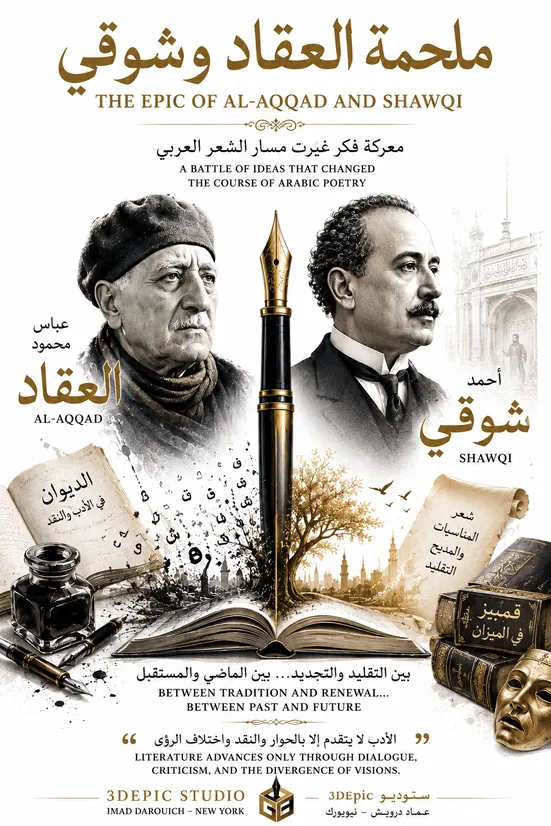
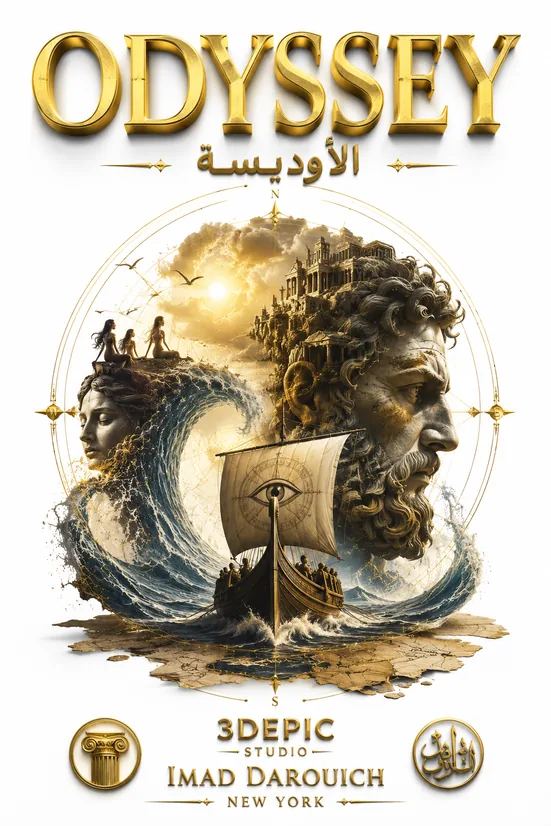
Abbas Mahmoud al-Aqqad, with Ibrahim al-Mazini, attacked the poetry of Ahmed Shawqi in their critical book Al-Diwan in 1921, calling for a poetry of the self over the classical ode. Imad's epic of Al-Aqqad and Shawqi tells that quarrel as a battle fought with pens: Shawqi wearing the crown of classicism, Al-Aqqad carrying the hammer of modernity, and Arabic poetry changing course between them.
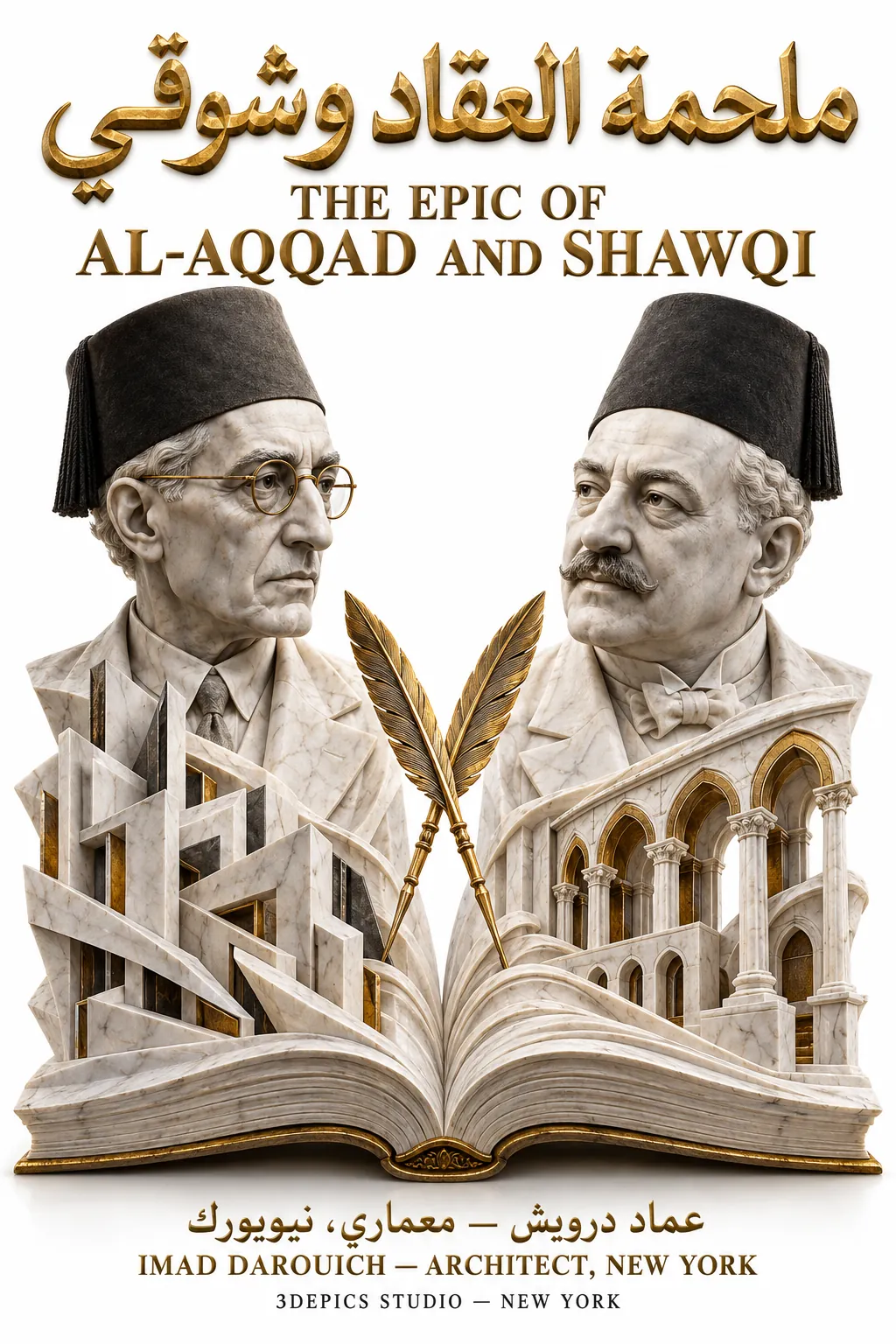
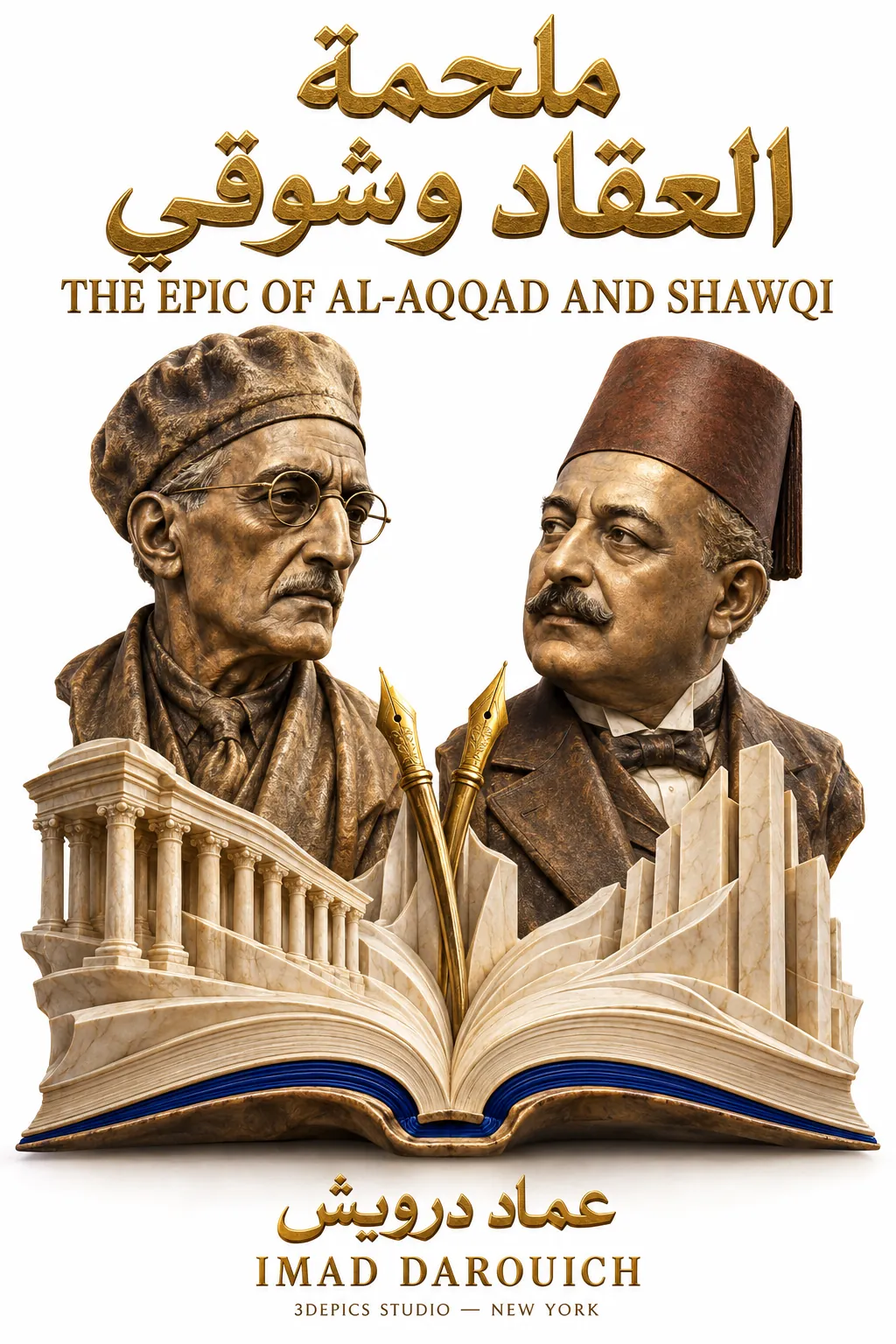
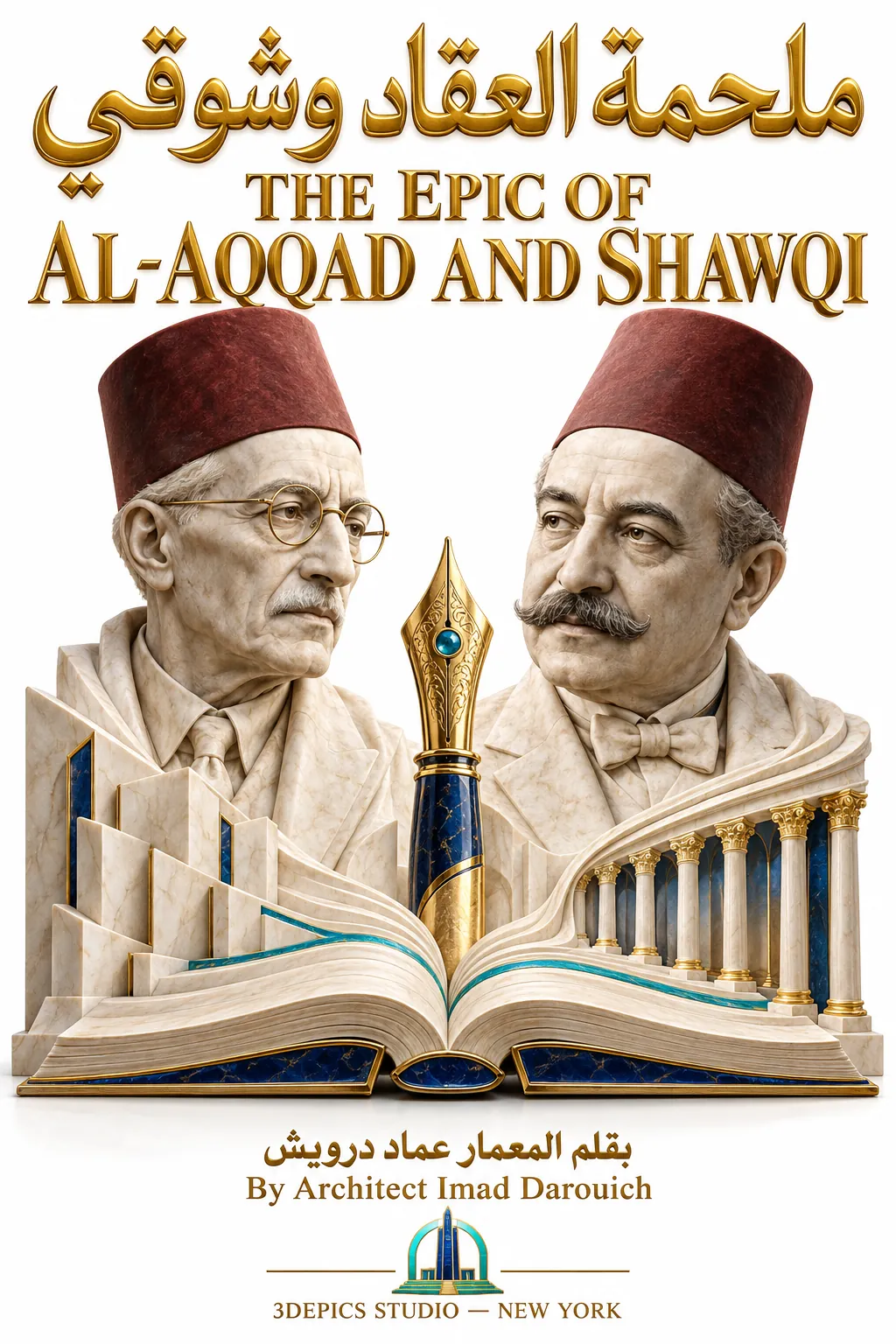
ليست كل الحروب تُخاض بالسيوف… فبعضها يُغيّر مصير الأمم بقلمٍ واحد.Not every war is fought with swords… some reshape civilizations with a single pen.
هناك معارك تنتهي عند سقوط الجسد، وأخرى تبدأ عندما تستيقظ الفكرة.Some battles end with the fall of bodies; others begin when an idea awakens.
في مطلع القرن العشرين، لم يكن الشعر العربي يبحث عن شاعر جديد، بل عن روح جديدة.At the dawn of the twentieth century, Arabic poetry was searching not for a new poet, but for a new soul.
وكان لا بد أن يصطدم جبلٌ بجبل، حتى يتغير مجرى النهر.A mountain had to collide with another mountain before the river could change its course.
لم يقف العقاد أمام أحمد شوقي بوصفه خصمًا، بل وقف أمام عصرٍ كامل.Al-Aqqad did not confront Ahmed Shawqi as a rival; he confronted an entire literary age.
كان شوقي تاج المدرسة الكلاسيكية، وكان العقاد مطرقة الحداثة.Shawqi wore the crown of classicism, while Al-Aqqad carried the hammer of modernity.
عاد شوقي من منفاه يحمل أمجاد الماضي، بينما جاء العقاد يحمل أسئلة المستقبل.Shawqi returned from exile carrying the glory of the past, while Al-Aqqad arrived carrying the questions of the future.
لم يكن الخلاف بين شاعر وناقد، بل بين ذاكرةٍ تريد البقاء، ومستقبلٍ يرفض أن يولد قديمًا.The conflict was not between a poet and a critic, but between memory seeking permanence and a future refusing to be born old.
رفع العقاد كتاب «الديوان» كما تُرفع راية الثورة الفكرية.Al-Aqqad raised “Al-Diwan” like the banner of an intellectual revolution.
وأعلن أن القصيدة ليست زخرفة ألفاظ، بل هندسة روح.He declared that poetry is not ornamental language, but the architecture of the soul.
اتهم شوقي بتفكك البناء، والإفراط في الزينة، والابتعاد عن حرارة الإنسان.He accused Shawqi of fragmented structure, excessive ornamentation, and emotional distance from humanity.
وردّ أنصار شوقي بعنف، لأن سقوط المألوف دائمًا يبدو كأنه سقوط العالم.Shawqi’s supporters fought back fiercely, for the collapse of tradition often feels like the collapse of the world itself.
لكن الأفكار لا تُقاس بعدد المصفقين، بل بعدد السنوات التي تبقى بعدها حيّة.Ideas are not measured by applause, but by the years they continue to live.
ثم عاد العقاد ليزن «قمبيز»، فلم يزن مسرحيةً فحسب، بل وضع التاريخ والشعر معًا في ميزان العقل.He later weighed “Cambyses,” placing not merely a play, but history and poetry together on the scales of reason.
وكان يرى أن التاريخ إذا فقد الحقيقة، فقد الفن أيضًا جزءًا من روحه.He believed that when history loses truth, art loses part of its soul as well.
لم يخرج أحدٌ من تلك المعركة منتصرًا بالكامل أو مهزومًا بالكامل.No one emerged from that battle completely victorious or completely defeated.
فقد بقي شوقي أمير الشعراء، وبقي العقاد أمير النقد الحديث.Shawqi remained the Prince of Poets, while Al-Aqqad became a prince of modern literary criticism.
وهكذا انتصر الأدب على الجميع.Thus, literature itself became the true victor.
كل نهضةٍ تبدأ باحترام التراث… لكنها لا تكتمل إلا بجرأة السؤال.Every renaissance begins by honoring tradition… but is completed only through the courage to question.
ولو لم يكتب شوقي، لما وجد العقاد ما يهدم ليبني.Had Shawqi not written, Al-Aqqad would have had nothing to dismantle in order to rebuild.
ولو لم يكتب العقاد، لبقيت أبواب التجديد موصدةً زمنًا أطول.Had Al-Aqqad not written, the doors of renewal might have remained closed much longer.
ذلك هو قانون الحضارة…Such is the law of civilization…
فالعظماء لا يصنعون التاريخ لأنهم يتفقون، بل لأنهم يختلفون على معنى المستقبل.Great minds shape history not because they agree, but because they dare to disagree about the meaning of the future.
Arabic poetry and its great voices return in The Future Odes: Poems Hung on the Walls of Hearts and in The Epic of the Cup Reader: An Epic of Love and Betrayal.
Written by
Architect Imad Darouich
المهندس المعماري عماد درويش
Architect, author and founder of 3DEPICS, based in New York. He writes epic literature that crosses borders, languages and geographies, where philosophy meets architecture, spirituality meets history and memory meets imagination.