Philosophical and Intellectual Epics: When the Question Became a Home for the Mind is a bilingual ebook in English and Arabic, a literary and intellectual journey through questions associated with thinkers of many ages and traditions, from wonder to responsibility. It opens with a prose poem that calls philosophy humanity's greatest adventure and every question a silent revolution, and an author's note explaining that its poetic images are the writer's reflections rather than quotations from the thinkers' books.
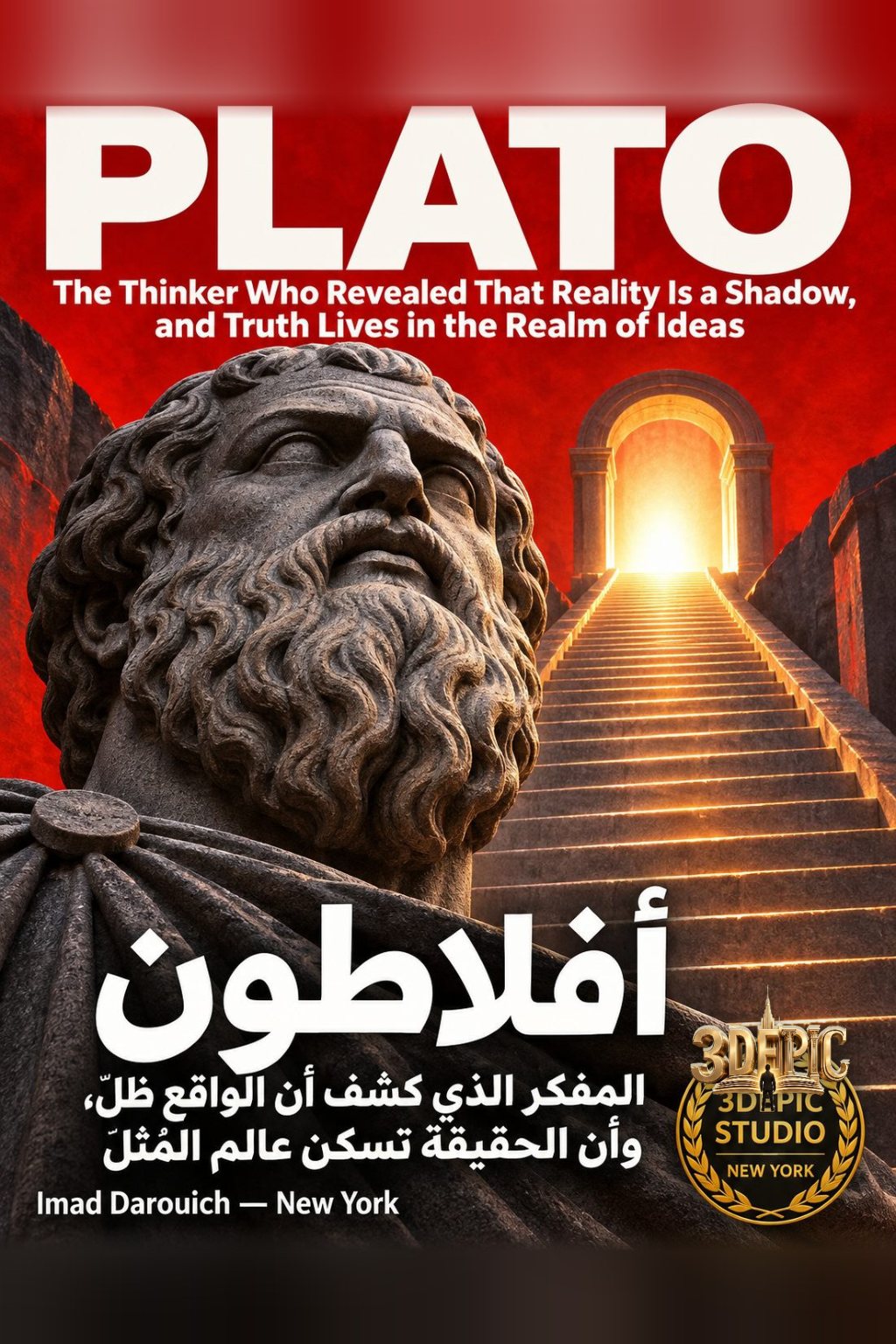
The narrator is an architect at his drafting table who draws a door and asks who can pass through it. With Socrates he finds that some of what he called knowledge was familiarity with a word; Plato's cave becomes a narrow window mistaken for the world; Aristotle teaches that a column's load and the fair allocation of housing need different kinds of answer; Confucius and the Buddha, kept distinct, open doorways onto relationships and onto suffering and attachment; Al-Farabi brings him back to the city and the purpose of living together, and Ibn Sina to a person that no list of functions can exhaust.
Al-Ghazali and Ibn Rushd are read for the ethics of disagreement, without reducing them to a quarrel between heart and mind; Ibn Arabi and Rumi ask whether love reaches the tree beside one's door; Descartes, Spinoza and Kant ask what made us accept an idea and what we permit ourselves to do; and Hegel, Kierkegaard, Nietzsche and Heidegger bring history, anxiety, inherited values and time into an ordinary day. Hannah Arendt's questions of judgment arrive at a document awaiting a signature, and the book sends the reader back to life with a question worth living with.
For readers new to philosophy, for students of Greek, Eastern, Islamic and modern thought, and for anyone who wants ideas to change how they act.