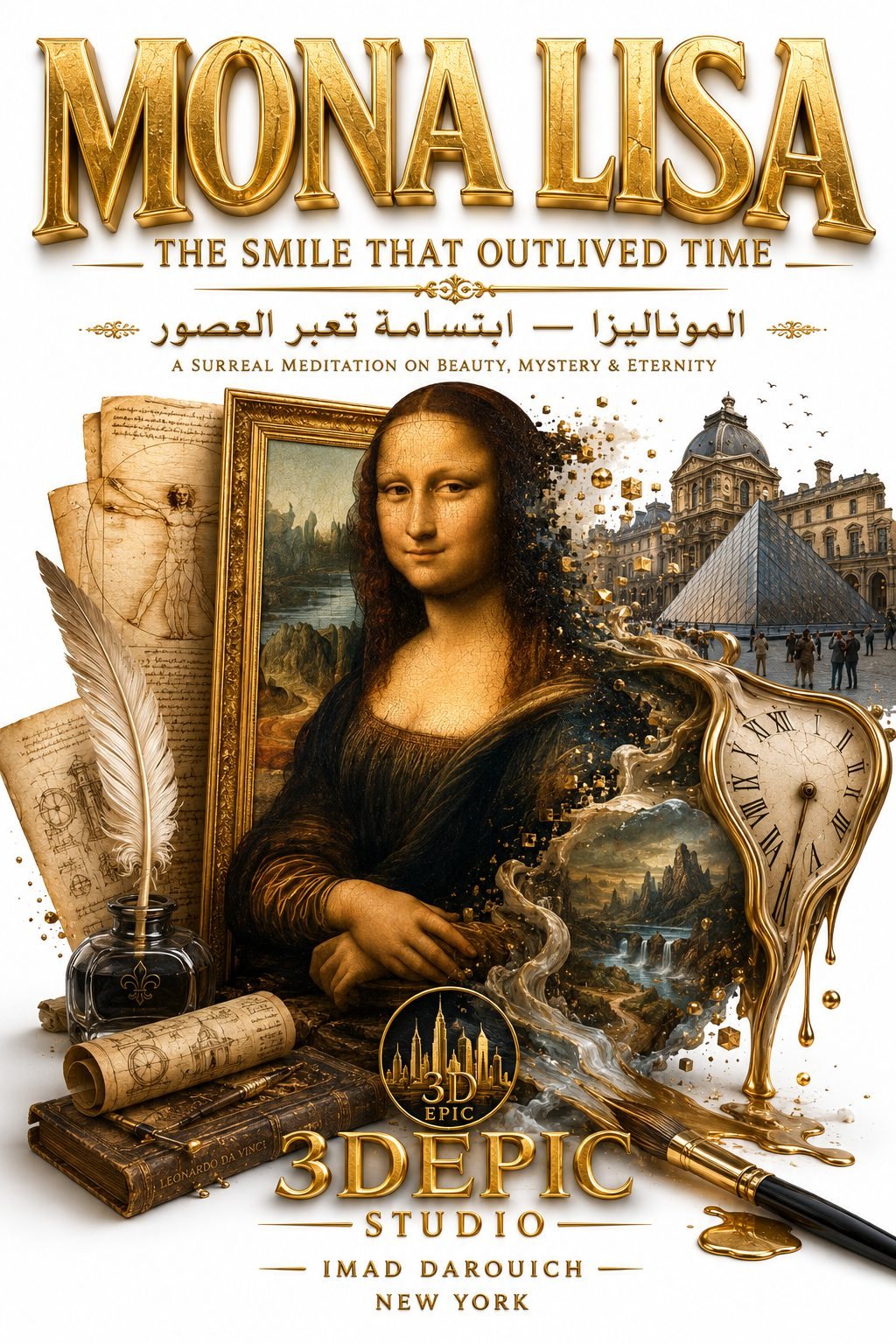
A reading of Leonardo da Vinci through his notebooks and paintings, from Verrocchio's workshop and the clay horse in Milan to the Vitruvian Man, The Last Supper, the flight of birds, the Mona Lisa and his glass model of the heart. The book asks how close looking becomes knowledge.
Format
PDF ebook
Languages
Arabic and English
Collection
Literature & Art
Open the Epic… Let the Story Carry You Beyond.
One payment. Download it right away, no account needed. PDF · 46 pages.
Or unlock the entire library with your subscription: download every book and discover new epics added each week.
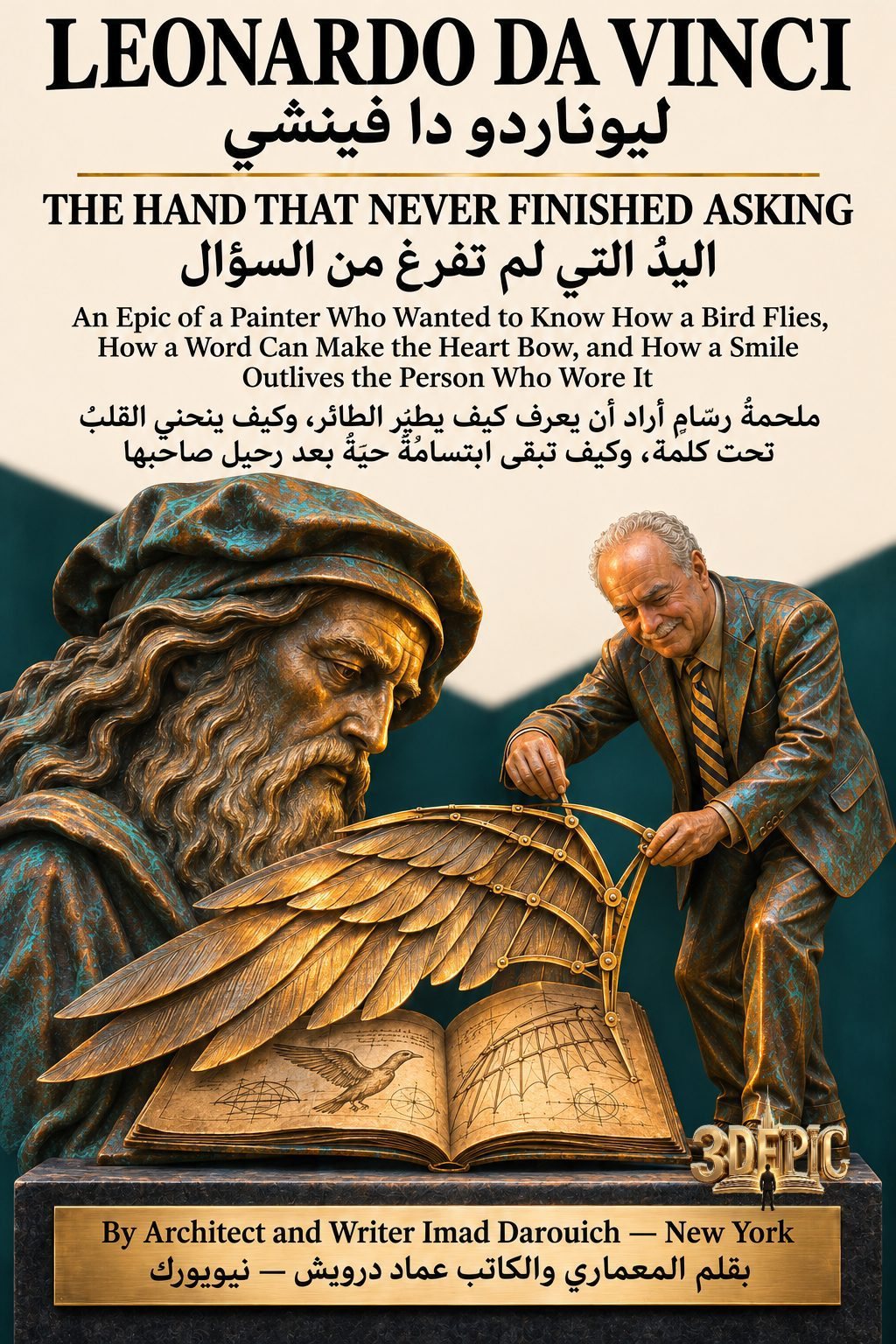
Leonardo da Vinci: The Eye That Wanted to See How Water Becomes a Pulse is a bilingual ebook in English and Arabic that follows Leonardo through his paintings and notebooks, with imagined scenes that enter the space between his hand and what it drew. It opens with his studies of the heart, when he made a glass model and ran water carrying tiny seeds through it to watch how the flow turned near the valve, and then returns to the boy born in Vinci, near Florence, whose earliest dated drawing of a Tuscan landscape was written in mirror script.
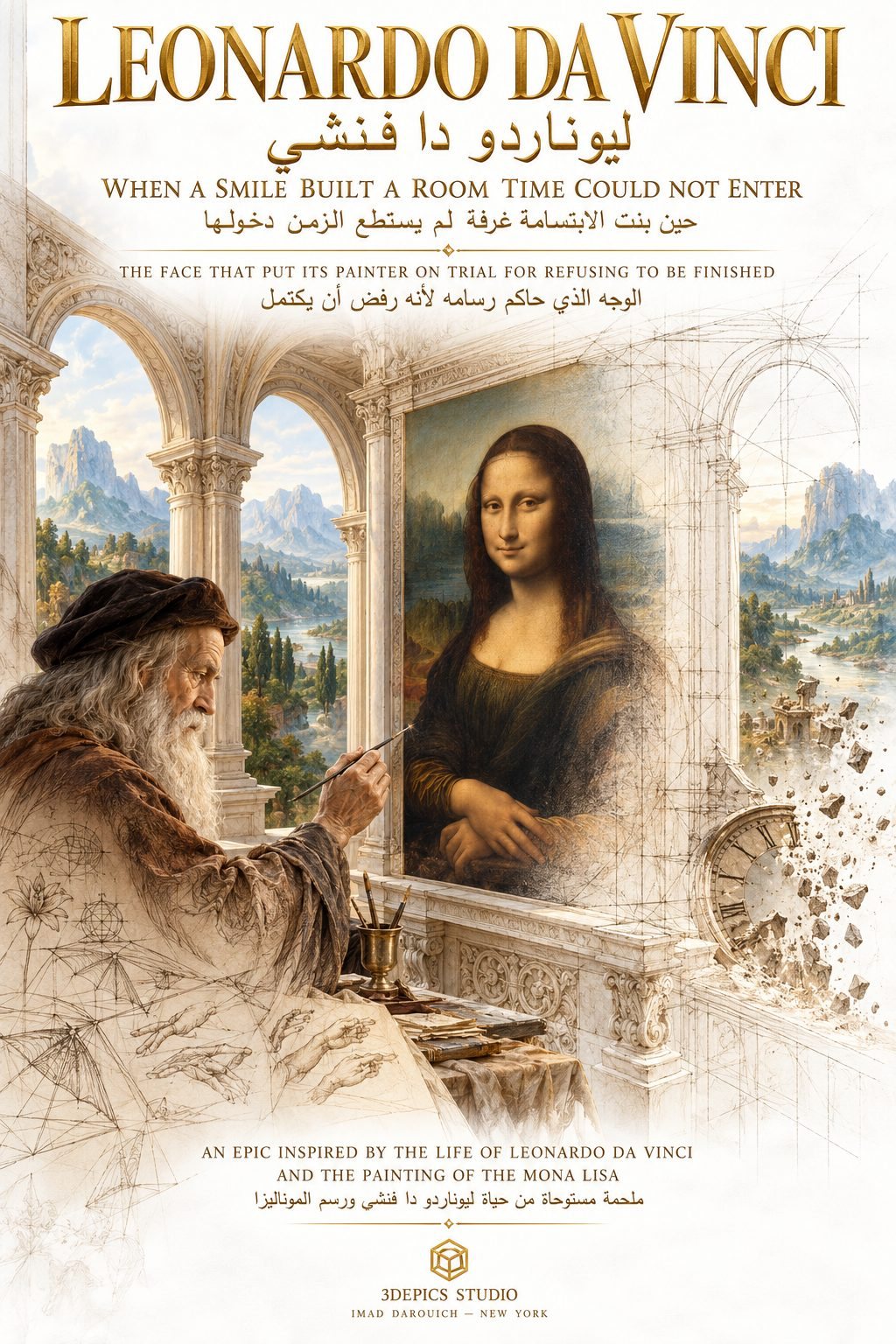
The chapters follow him into Verrocchio's workshop in Florence and the unfinished Adoration of the Magi, then to Milan, where he offered Ludovico Sforza what a ruler might need in war and modelled a vast clay horse whose bronze was taken for weapons. The Vitruvian Man shows a body with more than one centre, read by an architect who knows how much of a person is lost in a drawing of a wall; The Last Supper captures the moment Christ tells his disciples one of them will betray him, painted in a medium more fragile than fresco; and a map of Imola drawn for Cesare Borgia shows the city as seen by someone who wants to possess it.
The Codex on the Flight of Birds turns air into a material a bird can lean on, an old man's quiet death in a Florence hospital leads Leonardo to dissection and the heart, and Lisa Gherardini's portrait, the Mona Lisa, is read through her hands and the sfumato that dissolves every edge. The last chapter follows Francesco Melzi carrying the notebooks after Leonardo's death at Cloux near Amboise, and asks how many eyes might have taken his questions further had the pages been seen in their time.
For readers of Renaissance art and science, for students of anatomy, engineering and drawing, and for anyone curious how close looking becomes knowledge.
Looking at a work in its early stages, I know how easily a later layer can hide the hesitation that came before it.
The trace of a force may appear at the tip of a feather before the eye sees what moved it.
How many eyes might have seen a page in its own time and carried the question farther than he could take it alone?