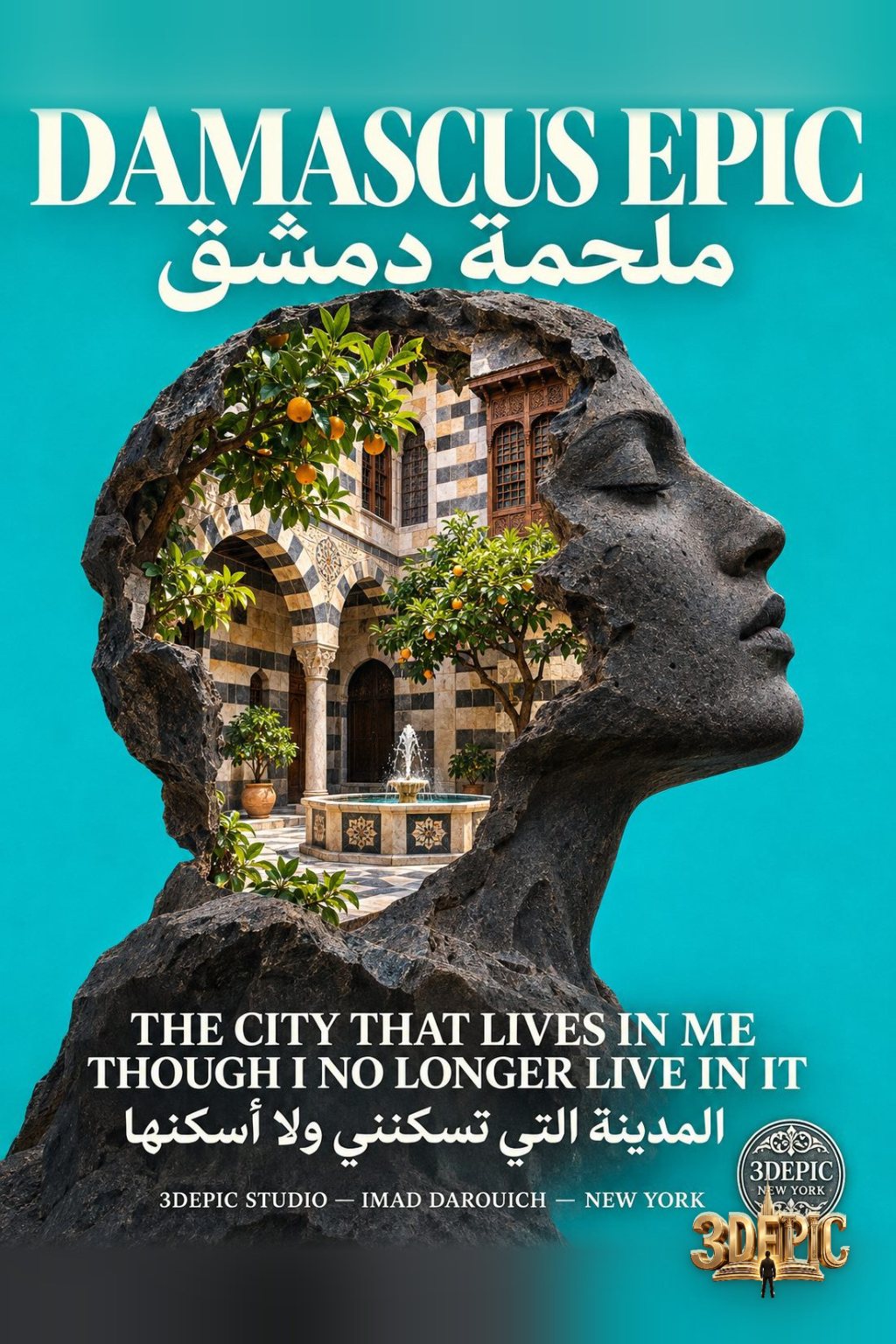
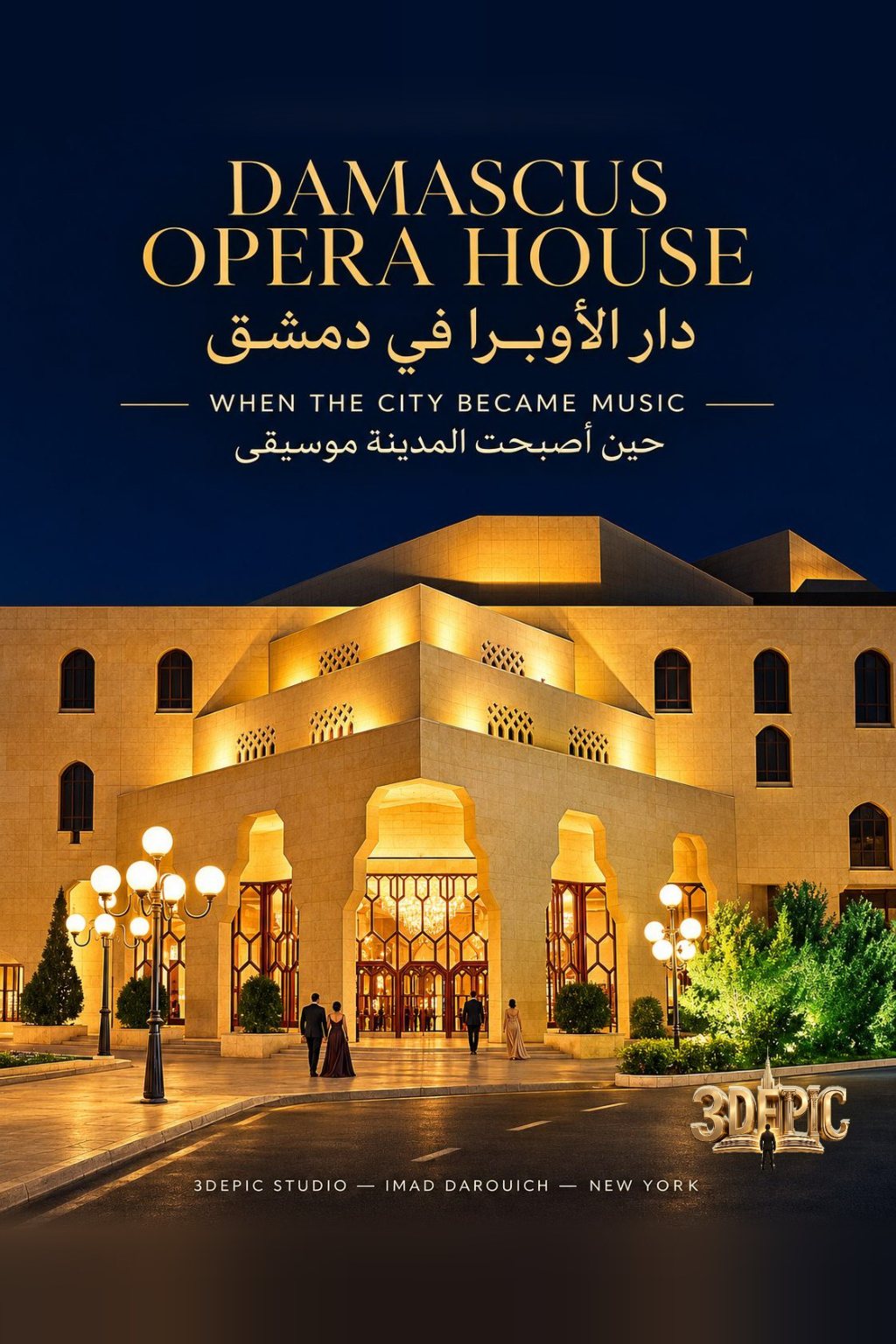
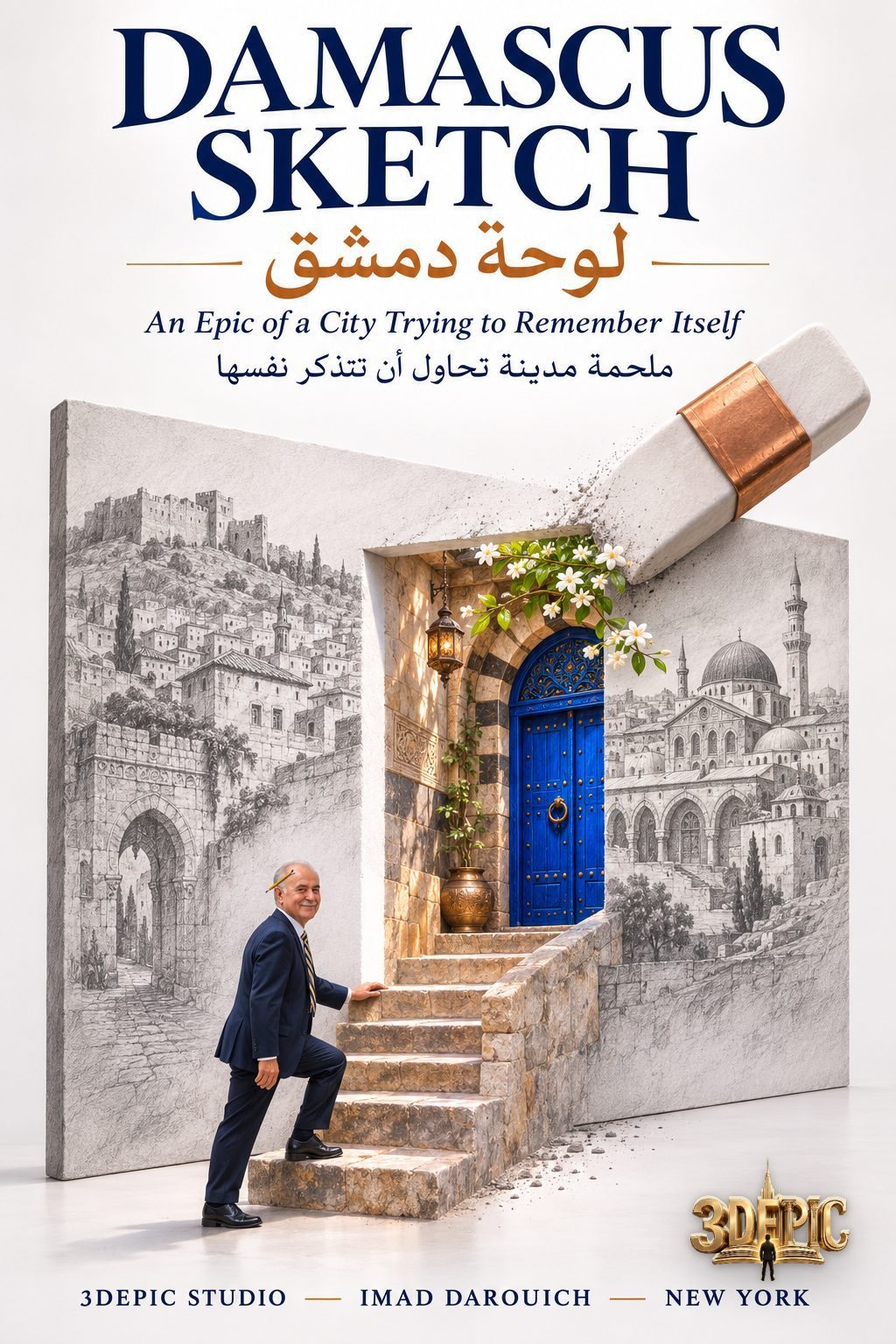
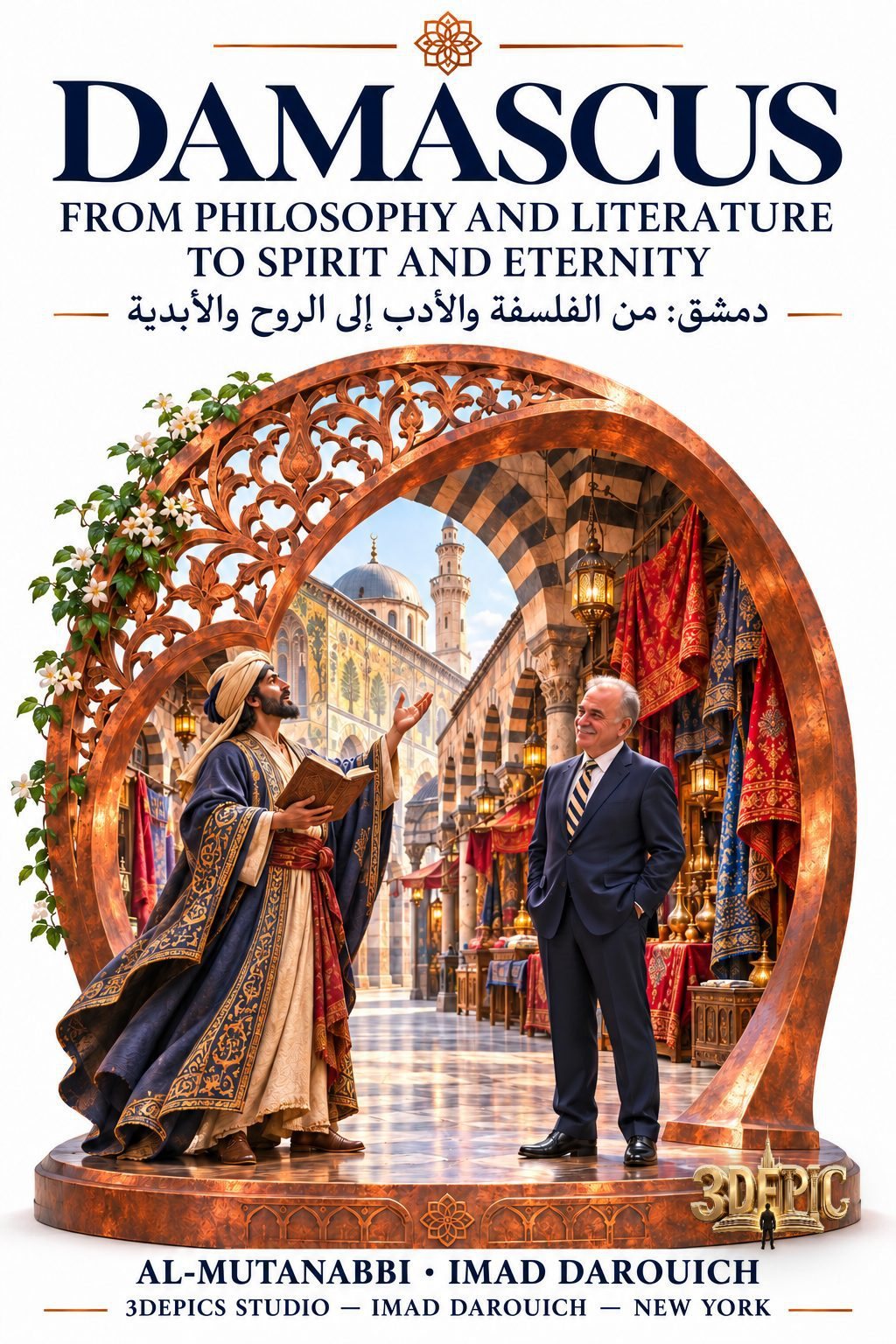
Damascus Epic: Damascus, the Door I Leave Open is a bilingual ebook in English and Arabic about the city an architect narrator left behind and still carries with him in New York. Written as a long letter of memory, it enters Damascus through its gates, markets, houses, crafts and voices, and it treats the city as a living being that knows how to rejoice, how to tire and how to remain.
A grand prologue lays down the city's long layers, from the Aramaeans through Hellenistic, Roman and Byzantine Damascus to the Umayyad Caliphate, Nur al-Din Zengi, Salah al-Din al-Ayyubi, the Mamluks and the Ottomans. Then the chapters turn personal: the gates of Bab Touma, Bab Sharqi, Bab al-Jabiya and Bab al-Faradis, Mount Qasioun, the Barada and the Ghouta as the city's lungs, and the covered markets from al-Hamidiyah and Midhat Pasha to al-Buzuriyah, ending at the Umayyad Mosque. The chapter on houses and arches reads the Damascene courtyard house, with its fountain, jasmine and bitter-orange tree, as a beauty that faces inward.
Later chapters open the pantry of makdous, jam and molasses, follow the craftsmen behind damask, copper and carved wood, and listen to a city where church bells and the call to prayer rise together. Night, exile and dream come next: memory redesigns the city, and in a surreal walk Qasioun stands inside a courtyard while the Barada runs between the rooms. The last chapter names the narrator's fear that heritage may outlive its meaning, and the ending leaves the book as an open door for a Damascene child not yet born.
For readers of Damascus and its old city, of the Damascene house and its heritage, and of memoirs about exile and the cities that stay with those who leave them.