When Space Became a Column: Mies van der Rohe and Daniel Libeskind
حين صار الفراغُ عمودًا
Mies's glass opens the room to the world, Libeskind's void keeps a place for what is gone, and an architect draws a column beside an empty space.
بقلم المهندس المعماري عماد درويش4 دقائق قراءة
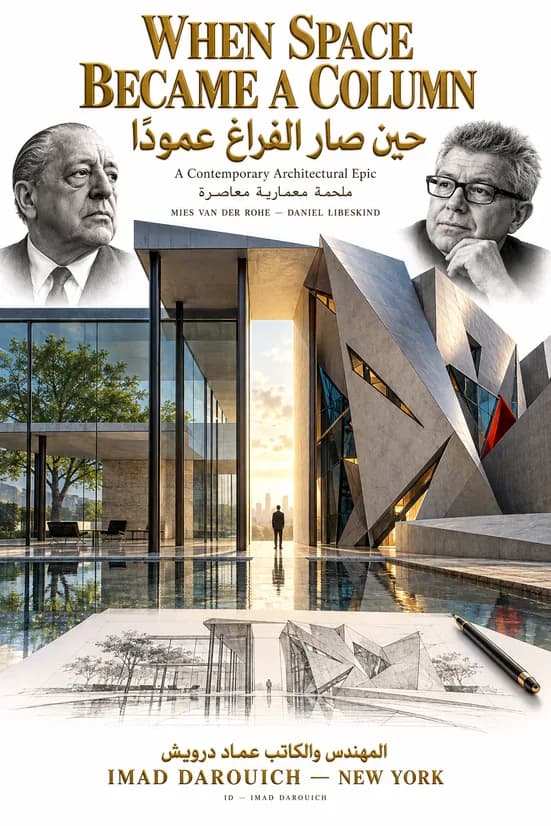
Ludwig Mies van der Rohe (1886 to 1969) built with industrial steel and plate glass and is linked with the phrase less is more, and Daniel Libeskind's Jewish Museum Berlin, opened in 2001, is cut through by a line of empty voids about 20 metres tall. Imad's prose poem reads Mies van der Rohe and Libeskind together and finds that an empty space can carry memory the way a column carries a roof.
لودفيغ ميس فان دير روه ودانيال ليبسكيندLudwig Mies van der Rohe and Daniel Libeskind
ملحمة معمارية معاصرةA Contemporary Architectural Epic
A Note
تنويه
نصٌّ أدبي يستلهم اللغة المعمارية لميس فان دير روه ودانيال ليبسكيند؛ التأويلات والصور رؤيا الكاتب، وليست أقوالًا منسوبةً إليهما.A literary work inspired by the architectural languages of Mies van der Rohe and Daniel Libeskind; its interpretations and imagery belong to the writer and are not quotations attributed to them.
The Introduction
المقدمة
أنا عماد درويش.I am Imad Darouich.
أرسم عمودًا، فأعرف أين سينزل ثقلُ السقف.I draw a column and know where the roof’s weight will descend.
وأترك فراغًا، فينزل إليه ما لا تستطيع الحساباتُ حمله.I leave a void, and into it descends what calculations cannot carry.
ذكرى.A memory.
انتظار.Waiting.
واسمٌ إذا نطقناه تغيّر الهواءُ في الغرفة.And a name that changes the room’s air when spoken.
من هنا أتأمّل عمارتين: واحدةً تمنح العينَ امتدادًا، وأخرى تجعل الخطوةَ تشعر بما غاب.From here I contemplate two architectures: one gives the eye an expanse; the other makes a footstep feel what is missing.
The Epic
الملحمة
عند ميس، ينسحب الجدارُ عن المشهد.With Mies, the wall withdraws from the view.
يقف الفولاذُ بدقّة، ويمتدُّ الزجاجُ بين الداخل والعالم.Steel stands with precision, and glass stretches between the interior and the world.
تدخل الشجرةُ إلى الغرفة بصورتها.The tree enters the room through its image.
ويعبر المطرُ الواجهةَ، دون أن يُبلّل الأرض.Rain crosses the façade without wetting the floor.
أرى السقفَ مستقيمًا فوق هذا الاتّساع.I see the roof held straight above this expanse.
كلُّ وصلةٍ فيه مطالبةٌ بأن تُتقن عملها.Every joint is required to do its work well.
الصفاءُ هنا ثمرةُ جهدٍ طويل.Clarity here is the fruit of long effort.
لكن الزجاجَ يكشف أيضًا.But glass also reveals.
وجهًا يقف وحده مساءً.A face standing alone at dusk.
ضوءًا لا يُطفئه أحد.A light no one switches off.
ومقعدًا يرى المدينةَ كلّها، وينتظر إنسانًا واحدًا.A chair that sees the entire city and waits for one person.
هنا يقترب ليبسكيند.Here Libeskind draws near.
يميل الخطُّ، وتنقطع استقامةُ الممرّ.The line tilts, and the corridor’s straight course breaks.
يصير الجدارُ سؤالًا يرافق الجسد.The wall becomes a question accompanying the body.
والفراغُ يمتدُّ داخل المبنى، محفوظًا من الامتلاء.The void stretches within the building, kept from being filled.
أقف أمامه.I stand before it.
أفهم لماذا لا ينبغي أن نجد وظيفةً لكلّ مساحة.I understand why we should not find a function for every space.
بعضُ الأمكنة يحتاج أن يبقى مفتوحًا لغيابٍ لا نملك تعويضه.Some places must remain open to an absence we cannot replace.
أعرف هذا في نفسي.I know this within myself.
في القلب موضعٌ لأبي.In my heart there is a place for my father.
مرّت عليه الأيام، وبقي باسمه.Days have passed over it, and it still bears his name.
إذا ملأتُه بالكلام، ضاق.If I fill it with words, it narrows.
وإذا تركتُه للدعاء، اتّسع.If I leave it to prayer, it expands.
هكذا يصبح الفراغُ حاملًا.This is how a void becomes a bearer.
يحفظ للذكرى مكانًا، ويمنح الحياةَ طريقًا من حولها.It keeps a place for memory and gives life a path around it.
بين زجاج ميس وشقوق ليبسكيند، أرى الإنسانَ يطلب أمرين.Between Mies’s glass and Libeskind’s fractures, I see the human being asking for two things.
أن يستطيع رؤيةَ العالم.To be able to see the world.
وأن يجد العالمُ متّسعًا لما يحمله.And for the world to have room for what that person carries.
لن يكفي أن تنفذ الشمسُ عبر الواجهة.It will not be enough for sunlight to pass through the façade.
علينا أن نعرف أين ستقع.We must know where it will fall.
على طاولةِ مَن يكتب؟On whose writing table?
على يدِ مَن يرتجف؟On whose trembling hand?
وعلى أيِّ عتبةٍ سيتوقّف مَن يخشى الدخول؟And at which threshold will someone afraid to enter stop?
هذه أسئلتي حين أرسم.These are my questions when I draw.
أشدُّ الخطَّ حتى يحمل.I steady the line until it can bear weight.
وأفتح فيه ما يكفي ليعبر إنسانٌ بحياته كلّها.And I open it enough for a person to pass through with an entire life.
The Ending
الخاتمة
يا ربّ، اجعل لنا بصيرةً ترى ما لا تُظهره المخطّطات.O Lord, give us the insight to see what plans cannot show.
من ميس، أتأمّل دقّةَ ما يبقى بعد أن تُحذف الزيادة.Through Mies, I contemplate the precision of what remains after excess is removed.
ومن ليبسكيند، أتأمّل حضورَ ما غاب، حين تُمنح له مساحة.Through Libeskind, I contemplate the presence of what is missing when space is given to it.
ثم أعود إلى عمودي الأوّل.Then I return to my first column.
أراجع الحديدَ، وأحسب الأحمال.I check the steel and calculate the loads.
وإلى جواره، أترك فراغًا.And beside it, I leave a void.
هناك سيقف شخصٌ لم أعرفه.Someone I have never known will stand there.
قد ينظر إلى المدينة.Perhaps that person will look toward the city.
وقد يذكر اسمًا، ويصمت.Perhaps they will remember a name and fall silent.
أريد للمبنى أن يحتمل الوقفتين.I want the building to hold both moments.
Each architect has his own book, Mies van der Rohe: The Epic of the Man Who Made Less Become More and Daniel Libeskind: The Architect Who Made Memory Build, and When the Wall Became a String hears Libeskind's walls beside the voices of Bach.
بقلم
Architect Imad Darouich
المهندس المعماري عماد درويش
مهندس معماري وكاتب ومؤسس 3DEPICS، يقيم في نيويورك. يكتب أدبًا ملحميًا يعبر الحدود واللغات والجغرافيا، حيث تلتقي الفلسفة بالعمارة، والروحانية بالتاريخ، والذاكرة بالخيال.