Burhan Tayara: The Man Who Taught Stone to See
برهان طيارة: الرجل الذي علَّم الحجر أن يرى
Imad's tribute, in Arabic and English, to the Homs-born architect who taught generations of students in Aleppo and Damascus.
بقلم المهندس المعماري عماد درويش5 دقائق قراءة
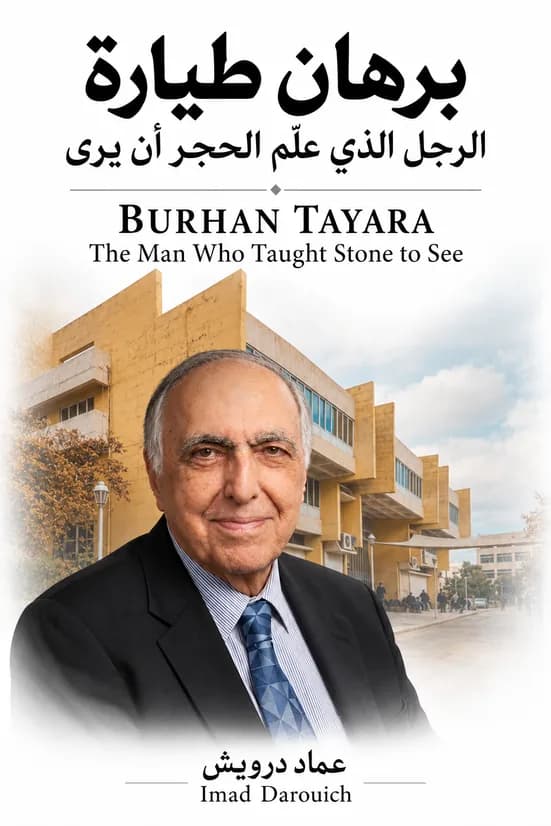
Bourhan Tayara, also written Burhan Tayara, was a Syrian architect and teacher, born in Homs in 1935, who studied at Ain Shams University, in Texas and at the Catholic University of America before teaching in Aleppo and Damascus; he died in 2018. Imad's tribute follows him to the Faculty of Architecture building in Damascus and the Center for Marine Research in Latakia, both his designs, and asks what a teacher leaves in other hands.
تنويه: هذه ملحمة أدبية تستلهم السيرة الواردة للدكتور محمد برهان طيارة؛ صورها الشعرية تخييل، وليست أقوالًا منسوبة إليه.Note: This literary epic draws on the biography of Dr. Muhammad Burhan Tayara; its poetic imagery is imaginative, not a record of his words.
أنا، ابنُ هذه المهنة، أعرف أن الجدار قد يرتفع… ويبقى المعنى على الأرض.As a son of this profession, I know a wall can rise… while meaning remains on the ground.
وأعرف أن بعض الرجال يضعون حجرًا، فيتغيّر اتجاه الضوء.And I know that some men lay a stone, and the light changes course.
اسمٌ أقرؤه، فأسمع مسطرةً تشقُّ صمت الورق.I read his name and hear a ruler cutting through the silence of paper.
كأن الصفحة أرضٌ تنتظر أن تعرف مصيرها.As though the page were land waiting to discover its destiny.
وكأن القلم يسأل: أين سيقف الإنسان؟As though the pencil were asking: Where will the human being stand?
من حمص بدأت الرحلة.The journey began in Homs.
هناك، عام 1935، وُلد طفلٌ ستكبر في يديه أسئلةُ المدن.There, in 1935, a child was born in whose hands the questions of cities would grow.
كانت البيوت أقدم من خطاه.The houses were older than his footsteps.
وكان المستقبل بلا باب.And the future had no door.
فمضى يبحث عن مفصلٍ يليق بفتحه.So he went in search of a hinge worthy of opening it.
في عين شمس، اتّسعت الصفحة.At Ain Shams, the page grew wider.
وفي تكساس، امتدَّ الأفق إلى ما وراء العين.In Texas, the horizon stretched beyond the reach of sight.
وفي الجامعة الكاثوليكية بأمريكا، تعمّق السؤال.At the Catholic University of America, the question grew deeper.
كم يحتاج الجدار من معرفةٍ كي يحتمل حياةً كاملة؟How much knowledge does a wall need to hold an entire life?
وكم يحتاج المعماري من تواضعٍ كي يترك للناس مكانًا في فكرته؟How much humility does an architect need to leave room for people within his vision?
ثم عاد إلى سوريا.Then he returned to Syria.
وأتخيّل المعرفة في حقيبته، تضيق كلما اقترب من الوطن.And I imagine knowledge in his suitcase, growing restless as he approached home.
تريد أن تخرج إلى شارع.It wanted to step into a street.
أن تتّسع لنافذة.To unfold into a window.
أن تجلس إلى جوار طالبٍ لم يثق بعدُ بيده.To sit beside a student who had not yet learned to trust his hand.
في حلب، ثم دمشق، صار الدرس ورشةً للمستقبل.In Aleppo, then Damascus, the lesson became a workshop for the future.
كلُّ طالبٍ يحمل مدينةً مطويّة.Every student carried a folded city.
وكلُّ سؤالٍ يفكُّ عنها طيّة.Every question opened another fold.
هكذا أرى المعلّم الكبير:This is how I see a great teacher:
يمدُّ المعرفة، ثم يفسح الطريق.He offers knowledge, then makes room.
حتى يستطيع الطالب أن يرفع سقفًا أعلى من خوفه.Until the student can raise a roof higher than his fear.
وفي عام 1968، حمل «المخططون والمعماريون العرب» الفكرة إلى أرض العمل.In 1968, “Arab Planners and Architects” carried the idea into practice.
خرجت الخطوط من بياضها.The lines emerged from their blank expanse.
صار لها وزن.They acquired weight.
وصار عليها أن تجيب عن الشمس، والشارع، والناس.And they had to answer to the sun, the street, and the people.
فالعمارة امتحانٌ طويل.For architecture is a long trial.
يمرُّ فيه الزمن بين الأعمدة.Time passes between its columns.
وتراجع الحياةُ الحساباتِ كلَّ صباح.And life reviews the calculations every morning.
وعند كلية العمارة في دمشق، أتوقّف.At the Faculty of Architecture in Damascus, I pause.
هنا يصبح السؤال مضاعفًا.Here, the question doubles.
كيف تبني مكانًا لمن سيتعلّمون بناء الأمكنة؟How do you build a place for those who will learn to build places?
كيف تجعل الجدار درسًا، من غير أن تغلق به الخيال؟How do you make a wall a lesson without enclosing the imagination?
أرى في هذا العمل مرآةً مفتوحة.I see in this work an open mirror.
يدخلها الطالب بيدٍ واحدة.The student enters it with one hand.
ويخرج منها، وفي أصابعه شوارع لم تولد بعد.And leaves with streets not yet born between his fingers.
وعلى ساحل اللاذقية، يتّخذ السؤال هيئةً أخرى.On the coast of Latakia, the question takes another form.
مركزٌ للأبحاث البحرية.A marine research center.
علمٌ يقف عند حافة الماء.Knowledge standing at the water’s edge.
وفي خيالي، يقترب البحر من المبنى ليتأمّل نفسه.In my imagination, the sea approaches the building to contemplate itself.
موجةٌ تقرأ نافذة.A wave reads a window.
ونافذةٌ تتعلّم اتّساع الموج.And a window learns the vastness of the wave.
ثم تمضي المعرفة إلى قاعاتٍ أخرى، في السعودية والإمارات.Then knowledge travels to other classrooms, in Saudi Arabia and the Emirates.
تتبدّل العناوين.The addresses change.
ويواصل السؤال رحلته بين الأيدي.And the question continues its journey from hand to hand.
أيُّ أثرٍ يتركه المعلّم؟What mark does a teacher leave?
أراه في قرارٍ صغير يتّخذه معماري بعد سنوات.I see it in a small decision an architect makes years later.
نافذةٌ أعاد موضعها كي يصل الضوء.A window repositioned to let the light reach through.
مدخلٌ وسّعه كي تعبر الحياة بكرامة.An entrance widened so life could pass with dignity.
وشجرةٌ أبقاها واقفةً حين كان الرسم يستطيع محوها.And a tree left standing when the drawing could have erased it.
هناك يتكلّم المعلّم مرّةً أخرى.There, the teacher speaks again.
بيدٍ لم تعد يده.Through a hand that is no longer his own.
وفي عام 2018، رحل برهان طيارة.In 2018, Burhan Tayara passed away.
أتخيّل القلم ساكنًا.I imagine the pencil still.
والورقة تستمع.And the paper listening.
ثم يفتح طالبٌ قديم نافذةً في مشروعٍ جديد.Then a former student opens a window in a new design.
فيدخل الضوء.And the light enters.
وتستأنف الحكاية عملها.And the story resumes its work.
يا برهان،Burhan,
أرفع اسمك في ذاكرتي كما يرفع المعماري منسوب الضوء.I raise your name in my memory as an architect raises the level of light.
وأترك حوله فراغًا يليق بما لم نعرفه من تعبك.And leave around it a space worthy of all we never knew of your labor.
فالمدن ترى المبنى.For cities see the building.
وقليلون يرون الليالي التي حملته قبل أساسه.Few see the nights that held it before its foundations.
وقليلون يسمعون ارتجاف الخطّ، قبل أن يصبح جدارًا.Few hear the trembling of the line before it becomes a wall.
أنا أحيّي تلك اليد.I salute that hand.
التي عبرت الورق إلى الحجر.The hand that crossed from paper into stone.
وعبرت الحجر إلى الإنسان.And crossed from stone into the human being.
ثم تركت في أيدي الآخرين قدرةً على العبور.Then left in other hands the power to cross.
سيشيخ الإسمنت.Concrete will age.
وستحتاج الواجهات إلى ترميم.Facades will need restoration.
أمّا السؤال الذي أيقظتَه، فسيظلُّ شابًّا:But the question you awakened will remain young:
كيف نبني مكانًا يستطيع الإنسان أن يرفع فيه رأسه؟How do we build a place where a human being can hold their head high?
Bourhan Tayara designed the building of the faculty honoured in Hymn of Architecture: Tribute to the Damascus Faculty of Architecture, and Imad remembers another Damascus teacher in Youssef Abu Hadid: My Teacher, Who Left a City in My Hands. More lives in building are in the architects collection.
بقلم
Architect Imad Darouich
المهندس المعماري عماد درويش
مهندس معماري وكاتب ومؤسس 3DEPICS، يقيم في نيويورك. يكتب أدبًا ملحميًا يعبر الحدود واللغات والجغرافيا، حيث تلتقي الفلسفة بالعمارة، والروحانية بالتاريخ، والذاكرة بالخيال.