When the Poor Sat in the Front Row
حين جلس الفقراء في الصف الأول
The powerful asked for the weak to be sent away. Imad reads the verse that kept the poor in the front row, and asks who sits there today.
By Architect Imad Darouich3 min read
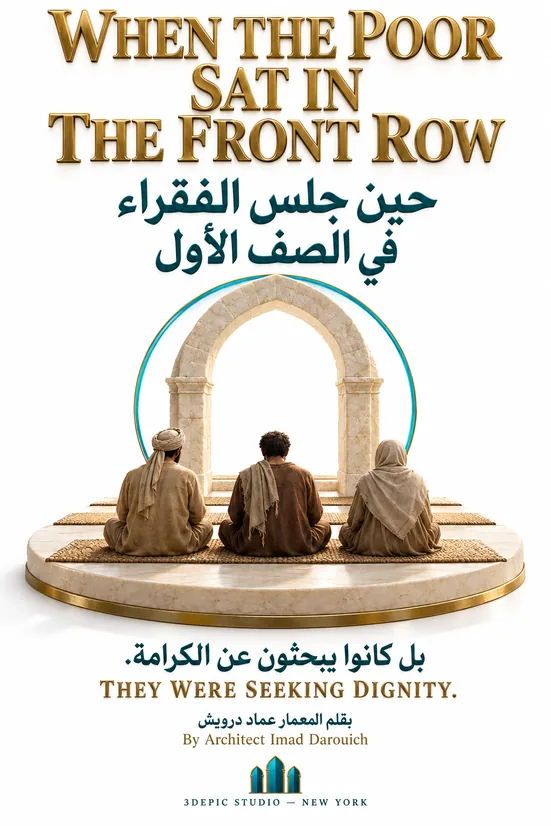
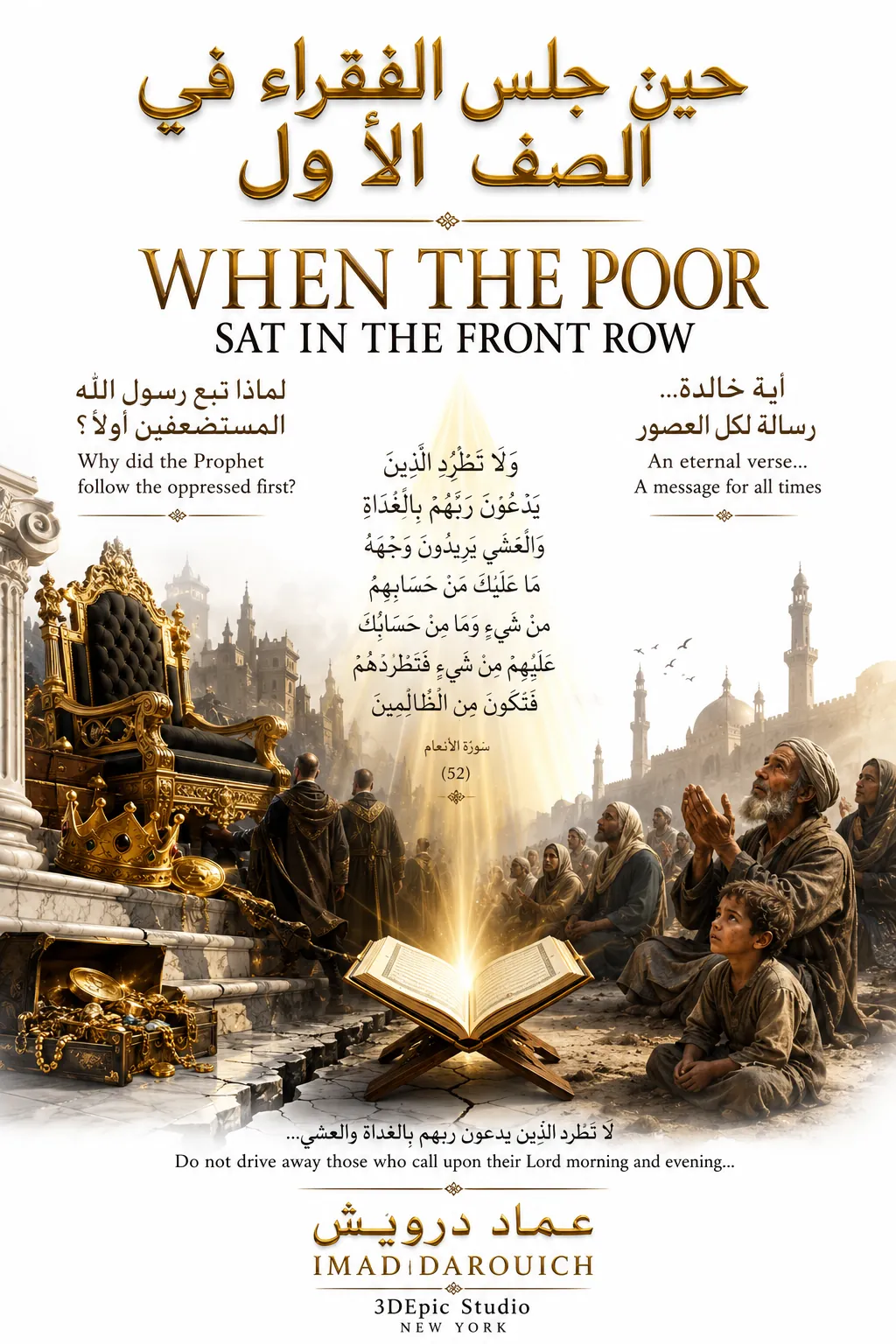
Surah al-An'am, verse 52, tells the Prophet: do not drive away those who call upon their Lord morning and evening, seeking His face. Imad's poem on Surah Al-Anam 52 imagines the moment the powerful asked for the poor to be removed from the gathering, then turns the verse on today's councils and laws, asking whether the poor still have a seat in our conscience before they have one in our meetings.
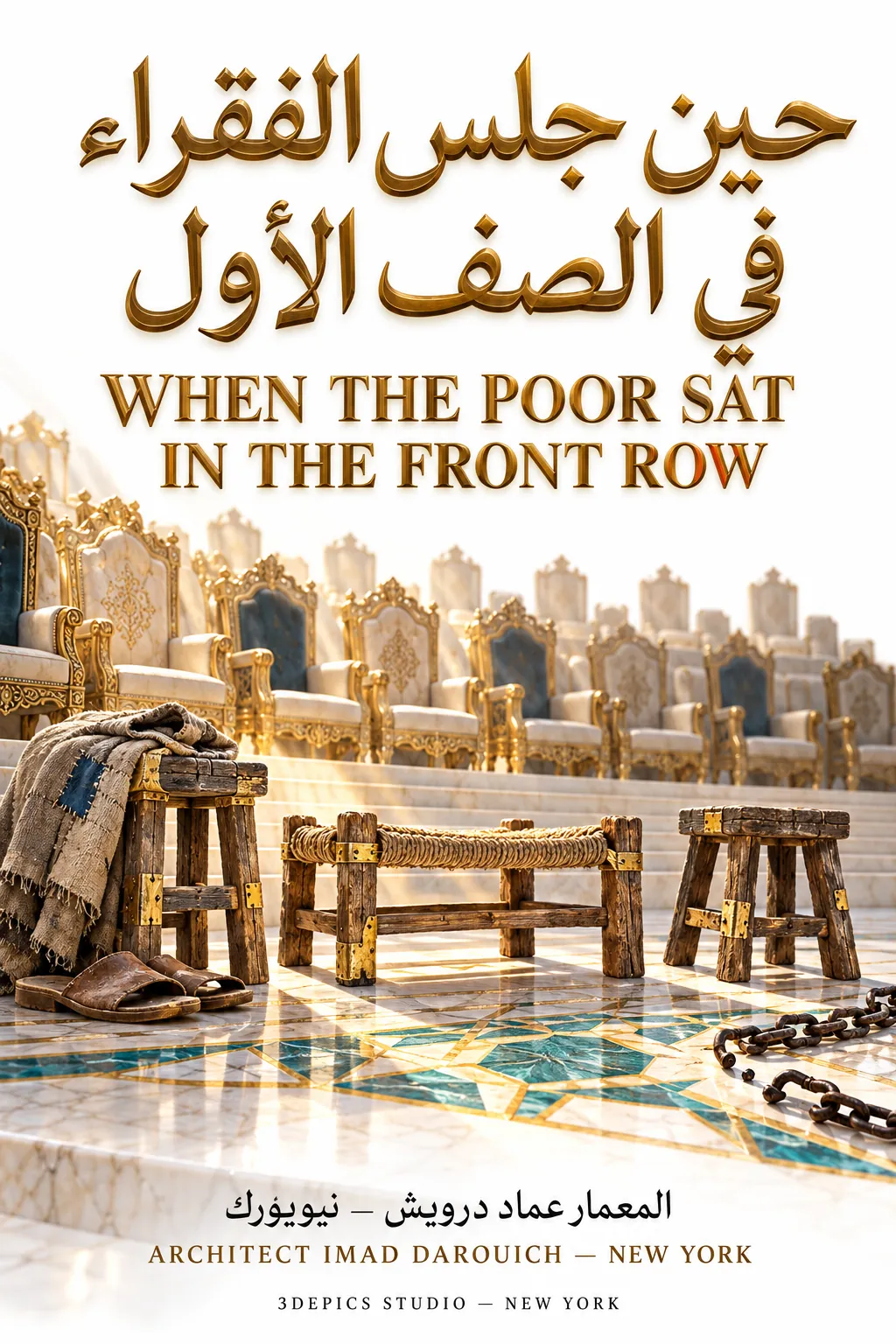
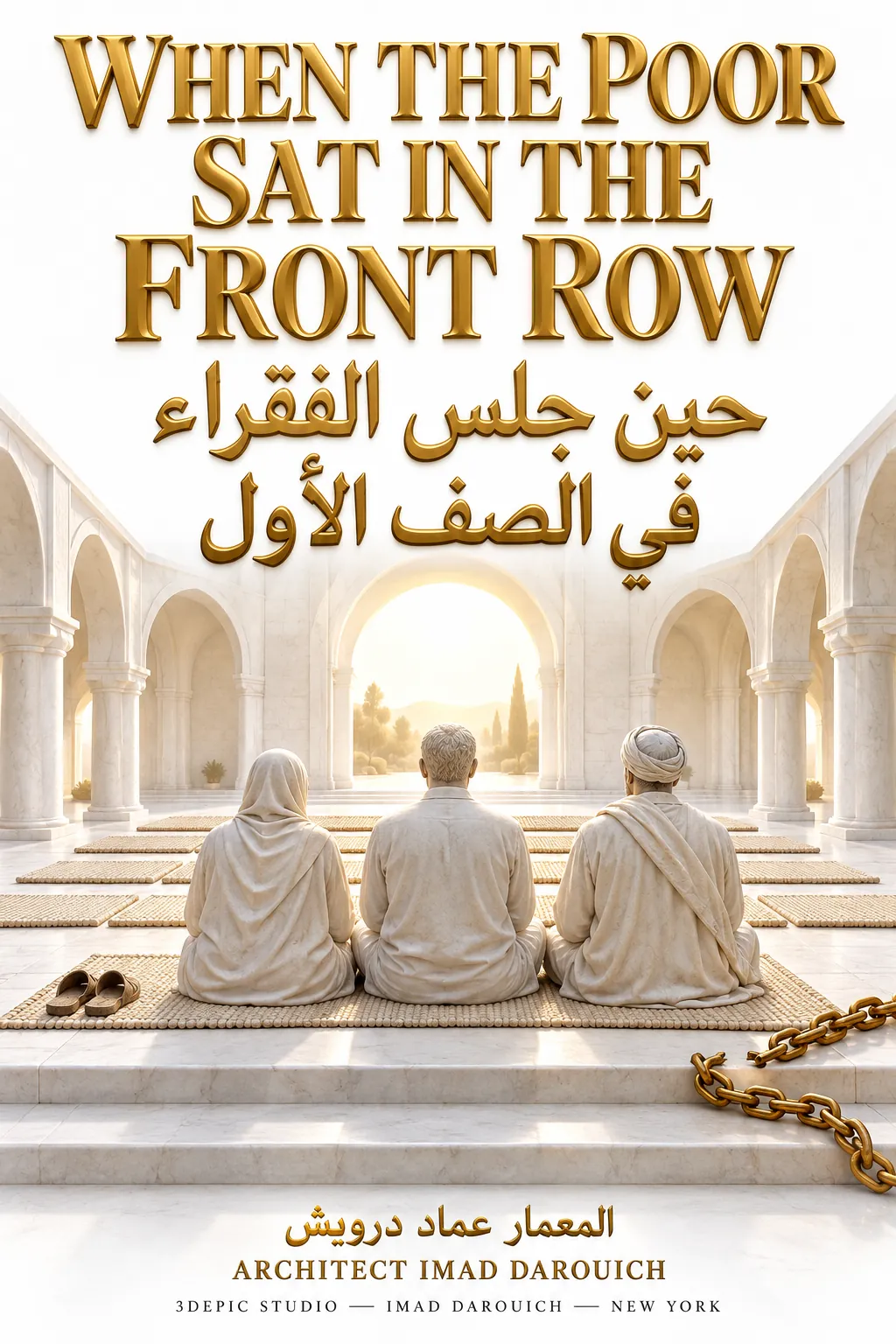
لم تبدأ الرسالات بالقصور.Revelations did not begin in palaces.
بل بدأت تحت ظلال الألم.They began beneath the shadow of suffering.
ولم يبحث الأنبياء عن الملوك.The prophets did not seek kings.
بل بحثوا عن القلوب.They sought hearts.
كان المستضعفون أول من سمع.The oppressed were the first to listen.
لأن القيود لا تمنع السمع.For chains do not silence the soul.
وكان المتكبرون آخر من آمن.The arrogant were the last to believe.
لأن الكبر أصمُّ من الحديد.For pride is deafer than iron.
لم يكن الفقراء يبحثون عن خبزٍ فقط.The poor were not seeking bread alone.
بل كانوا يبحثون عن الكرامة.They were seeking dignity.
ولم يعدهم محمد ﷺ بالقصور.Muhammad ﷺ did not promise them palaces.
بل وعدهم بالعدل.He promised them justice.
وكان ذلك أعظم من الذهب.And that was greater than gold.
وأبقى من السلطان.And more lasting than power.
ثم جاء أهل النفوذ.Then the powerful arrived.
وقالوا: نقبل... ولكن.They said: We accept... but.
اطرد الضعفاء.Send away the weak.
واجعل المجلس لنا.Let the gathering belong to us.
فجاء الجواب من السماء.Then the answer descended from Heaven.
لا من الأرض.Not from the earth.
﴾...وَلَا تَطْرُدِ الَّذِينَ يَدْعُونَ رَبَّهُم بِالْغَدَاةِ وَالْعَشِيِّ﴿"Do not drive away those who call upon their Lord morning and evening..."
لم تكن آيةً للفقراء فقط.It was not a verse only for the poor.
بل دستورًا للحكم.It was a constitution for governance.
ولم تكن عتابًا للنبي ﷺ.It was not merely a caution to the Prophet ﷺ.
بل إنذارًا لكل سلطة.It was a warning to every authority.
فإذا خلا المجلس من الضعفاء.If the weak vanish from the council.
فمن يتكلم باسم العدالة؟Who then speaks for justice?
وإذا جلس الأغنياء وحدهم.If only the wealthy are seated.
فمن يسمع أنين الأرامل؟Who hears the widows' cries?
وإذا غاب الفقراء عن القرار.If the poor are absent from decision-making.
فمن يذكّر الأقوياء بالله؟Who reminds the powerful of God?
لقد أراد الله.God willed.
أن يكون الضعيف حاضرًا.That the weak be present.
لا ليُشفق عليه الناس.Not to be pitied.
بل ليكون شريكًا في صناعة المصير.But to share in shaping destiny.
فيا أيها الساسة...O people of power...
كم مقعدًا تركتم للفقراء؟How many seats have you left for the poor?
ويا أيها المشرّعون...O lawmakers...
كم قانونًا كُتب بعيون الجائعين؟How many laws were written through the eyes of the hungry?
إن كانت الآية تُتلى إلى يوم القيامة.If this verse is recited until the Day of Judgment.
فهي لا تخاطب الماضي وحده.It does not speak only to the past.
بل تقف كل صباح.It stands every morning.
على أبواب البرلمانات.At the doors of parliaments.
وعلى موائد الحكومات.And around the tables of governments.
وتسأل سؤالًا واحدًا.Asking only one question.
Where are those who called upon their Lord morning and evening?
أين الذين كانوا يدعون ربهم بالغداة والعشي؟
فإن لم يجدوا مكانًا بينهم.If they find no place among them.
فمن الظالم؟Then who is the wrongdoer?
فالرسالات لا تُقاس بعدد القصور التي بُنيت.Revelations are not measured by the palaces they build.
بل بعدد المظلومين الذين استعادوا كرامتهم.But by the oppressed who regained their dignity.
ولعل السؤال الذي سيبقى يطارد كل أمة...Perhaps the question that will haunt every nation...
ليس: كم أصبحنا أقوياء؟Is not: How powerful have we become?
بل: هل ما زال للفقراء مقعدٌ في ضميرنا... قبل أن يكون لهم مقعدٌ في مجالسنا؟But: Do the poor still have a seat in our conscience before they have one in our councils?
The Prophet's community and its first companions are followed in Muhammad: The Human Prophet Who Built a Nation, and the Qur'an's images in An Epic of Artistic Imagery in the Qur'an.
Written by
Architect Imad Darouich
المهندس المعماري عماد درويش
Architect, author and founder of 3DEPICS, based in New York. He writes epic literature that crosses borders, languages and geographies, where philosophy meets architecture, spirituality meets history and memory meets imagination.