 3DEPICS
Is a Home Still a Home When It Is Temporary?
هل يبقى البيت بيتًا حين يصبح مؤقّتًا؟
Before a photograph of a crowded shelter, an imagined Shigeru Ban keeps asking one question: what will your design do?
By Architect Imad DarouichUpdated 6 min read
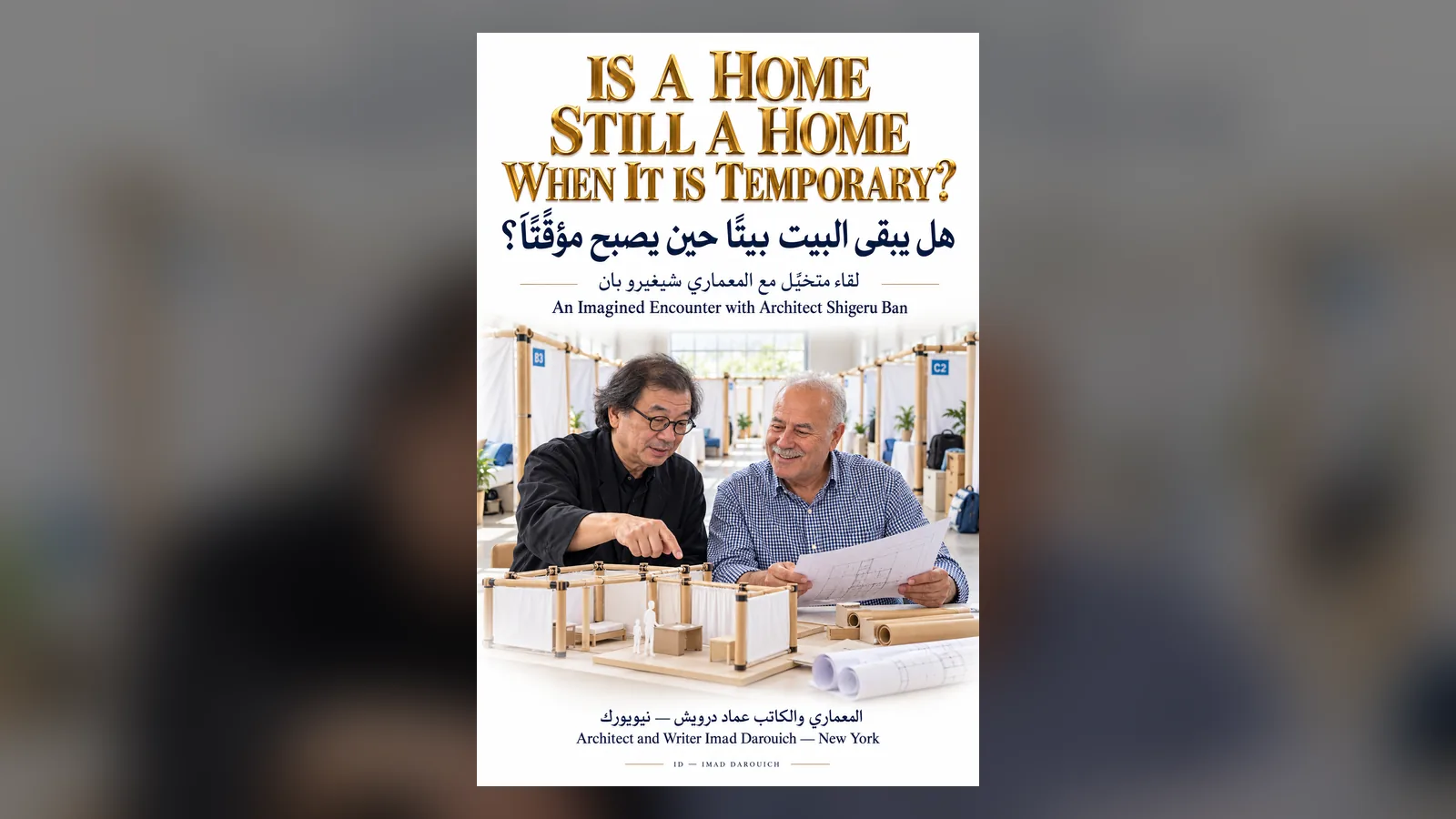
This essay stages an imagined meeting on Shigeru Ban shelter design, with a dialogue Imad wrote himself around a real problem: how to house displaced people with privacy and dignity when resources are limited. Starting from a photograph of a hall turned into a shelter, the Japanese architect keeps steering him from beautiful gestures toward partitions, storage, ventilation and exits.
لقاء مع المعماري شيغيرو بانAn Encounter with Architect Shigeru Ban
تنويهA Note
هذا لقاء متخيَّل بيني وبين المعماري الياباني شيغيرو بان. الحوار من تأليفي، ويتناول مشكلة حقيقية: كيف نوفّر للنازحين مأوى يحفظ خصوصيتهم وكرامتهم، حين تكون الموارد محدودة؟This is an imagined meeting between Japanese architect Shigeru Ban and me. The dialogue is my own and addresses a real problem: How can we shelter displaced people while preserving their privacy and dignity when resources are limited?
المقدّمةThe Introduction
كانت أمامي صورةٌ لقاعةٍ تحوّلت إلى مأوى.Before me was a photograph of a hall turned into a shelter.
فرشٌ متجاورة.Mattresses side by side.
حقائب عند الرؤوس.Bags beside people’s heads.
وثيابٌ معلّقة تحاول أن تصنع جدارًا.Hanging clothes trying to make a wall.
بحثتُ عن نافذة.I looked for a window.
ثم عن حمّام.Then for a bathroom.
ثم رأيتُ امرأةً تستدير كي تغيّر ثياب طفلها.Then I saw a woman turning away to change her child’s clothes.
كان هناك سقف.There was a roof.
لكنّ أحدًا لم يمنحها بابًا.But no one had given her a door.
في اللقاء الذي تخيّلته، وضعتُ الصورة أمام شيغيرو بان.In the meeting I imagined, I placed the photograph before Shigeru Ban.
قلت: هؤلاء يحتاجون إلى بيوت.I said, “These people need homes.”
قال: وماذا نستطيع أن نفعل لهم الليلة؟He asked, “And what can we do for them tonight?”
اللقاءThe Meeting
قلت: نحتاج إلى أرضٍ وتمويلٍ وتصميم.I said, “We need land, funding, and a design.”
قال: صحيح.He said, “Yes.”
لكنّ المرأة في الصورة لا تستطيع تأجيل حاجتها إلى الخصوصية.“But the woman in the photograph cannot postpone her need for privacy.”
نظرتُ إليها.I looked at her.
قلت: يمكن أن نضع فواصل بين العائلات.I said, “We could place partitions between families.”
قال: ابدأ بدراسة ذلك.He said, “Begin by examining that.”
كيف تُثبَّت؟“How will they be secured?”
كيف يخرج الناس عند الطوارئ؟“How will people leave in an emergency?”
وهل تبقى التهوية كافية؟“And will ventilation remain adequate?”
قلت: ظننتُ أنّ الحلّ أبسط.I said, “I thought the solution was simpler.”
قال: يمكن أن يكون بسيطًا.He said, “It can be simple.”
لكن يجب أن يكون مدروسًا.“But it must be thought through.”
قلت: لماذا نهتمّ بكلّ هذا في مكانٍ مؤقّت؟I asked, “Why give all this attention to a temporary place?”
قال: كم سيبقون؟He asked, “How long will they stay?”
قلت: لا أعرف.I said, “I do not know.”
قال: إذن كلمة «مؤقّت» لا تخبرنا بما يكفي.He said, “Then the word ‘temporary’ does not tell us enough.”
قد ينام الطفل هنا الليلة.“A child may sleep here tonight.”
وقد يبدأ دراسته هنا بعد أشهر.“And may begin school here months later.”
علينا أن نخطّط لما نعرفه.“We must plan for what we know.”
وأن نترك مجالًا لما قد يتغيّر.“And leave room for what may change.”
أشرتُ إلى الحقائب.I pointed to the bags.
قلت: المكان مزدحم.I said, “The space is crowded.”
قال: ماذا تحمل هذه الحقائب؟He asked, “What do those bags hold?”
قلت: ثيابًا. أوراقًا. أشياء استطاعوا إنقاذها.I said, “Clothes. Documents. Things they managed to save.”
قال: إذن التخزين جزءٌ من المأوى.He said, “Then storage is part of the shelter.”
الإنسان يحتاج إلى مكانٍ ينام فيه.“A person needs somewhere to sleep.”
ويحتاج إلى مكانٍ يعرف أنّ أغراضه فيه.“And somewhere they know their belongings will remain.”
تذكّرتُ مخطّطاتٍ رسمتُ فيها الأسرّة.I remembered plans in which I had drawn beds.
ولم أرسم مكانًا لحقيبة.And had drawn no place for a bag.
قلت: ما أوّل سؤالٍ نطرحه على العائلات؟I asked, “What is the first question we should ask the families?”
قال: ما أصعب شيءٍ في يومكم هنا؟He said, “What is the hardest part of your day here?”
قلت: ألن يجيبوا جميعًا بأنّهم يريدون العودة؟I asked, “Will they not all say they want to return?”
قال: قد يقولون ذلك.He said, “They may.”
اسمعه.“Listen to that.”
ثم اسأل عن هذه الليلة.“Then ask about tonight.”
قد تحتاج امرأةٌ إلى مكانٍ ترضع فيه.“A woman may need somewhere to breastfeed.”
وقد يحتاج مسنٌّ إلى طريقٍ أقصر للحمّام.“An elderly person may need a shorter route to the bathroom.”
وقد يحتاج طفلٌ إلى ضوءٍ لا يوقظ الجميع.“A child may need a light that does not wake everyone.”
لا تفترض أنّ حاجاتهم متطابقة لأنهم فقدوا بيوتهم.“Do not assume their needs are identical because they have lost their homes.”
قلت: والمال قليل.I said, “And money is scarce.”
قال: ضع قائمةً بالاحتياجات.He said, “Make a list of needs.”
ثم حدّد ما يمسّ السلامة.“Then identify what affects safety.”
وما يحمي الصحّة.“What protects health.”
وما يجعل الحياة اليومية ممكنة.“And what makes daily life possible.”
قلت: وماذا عن الجمال؟I asked, “And what about beauty?”
قال: قد يكون في ضوءٍ جيّد.He said, “It may lie in good light.”
وفي ترتيبٍ يستطيع الناس فهمه.“And in an arrangement people can understand.”
وفي مساحةٍ نظيفة لا يشعرون فيها بأنّهم متروكون.“And in a clean space where they do not feel abandoned.”
لا يحتاج كلّ ذلك إلى موادّ فاخرة.“None of that necessarily requires luxurious materials.”
لكنه يحتاج إلى اهتمام.“But it requires care.”
قلت: أريد أن أصمّم شيئًا يبعث الأمل.I said, “I want to design something that gives hope.”
قال: ماذا سيفعل؟He asked, “What will it do?”
قلت: سيبدو جميلًا.I said, “It will look beautiful.”
قال: وماذا سيفعل؟He asked again, “What will it do?”
توقّفتُ.I stopped.
ثم قلت: سيمنح كلّ عائلة مساحةً تستطيع إغلاقها.Then I said, “It will give each family a space they can close.”
ومكانًا لأغراضها.“And somewhere for their belongings.”
وطريقًا واضحًا إلى الخدمات.“And a clear route to essential facilities.”
قال: الآن تستطيع أن تختبر فكرتك.He said, “Now you can test your idea.”
الأمل الذي تعدهم به يحتاج إلى شيءٍ يستخدمونه.“The hope you promise needs something they can use.”
قلت: وكيف نعرف أنّ التصميم نجح؟I asked, “How do we know the design has worked?”
قال: ارجع بعد استعماله.He said, “Return after people have used it.”
راقب ما غيّروه.“Observe what they changed.”
أين علّقوا ستارةً إضافية؟“Where did they hang another curtain?”
أين تراكمت الأحذية؟“Where did shoes pile up?”
وأيّ ممرّ تجنّبوه؟“And which passage did they avoid?”
قلت: قد يفسدون ترتيب المخطّط.I said, “They may disrupt the plan’s arrangement.”
قال: وقد يكشفون ما أغفلته.He said, “And they may reveal what you overlooked.”
عدتُ إلى صورة المرأة.I returned to the photograph of the woman.
قلت: كان يمكن أن أكتب عن صبرها.I said, “I could have written about her endurance.”
قال: ويمكنك أيضًا أن تبحث كيف تمنحها خصوصيّتها.He said, “You can also investigate how to give her privacy.”
نظرتُ إلى قلمي.I looked at my pencil.
شعرتُ بثقله.I felt its weight.
كنت أستطيع أن أرسم جدارًا في ثانية.I could draw a wall in a second.
لكنّ تنفيذه يحتاج إلى مادةٍ وعاملٍ وقرار.But building it required material, labour, and a decision.
قلت: سأبدأ بمن يستطيع مساعدتي على التنفيذ.I said, “I will begin with those who can help me build it.”
قال: وابدأ أيضًا بمن سيعيش خلفه.He said, “And begin also with those who will live behind it.”
الخاتمةThe Ending
انتهى اللقاء المتخيَّل.The imagined meeting ended.
وبقيت الصورة.The photograph remained.
كتبتُ تحتها:I wrote beneath it:
عدد الأشخاص وحده لا يكفي لتصميم المأوى.The number of people alone is not enough to design a shelter.
علينا أن نعرف كيف سيعيشون فيه.We must understand how they will live in it.
ثم رسمتُ مساحةً لعائلة.Then I drew a space for a family.
حدّدتُ مدخلها.I marked its entrance.
ومكان أغراضها.A place for its belongings.
ومسار خروجها.Its exit route.
وتركتُ بجانب الرسم سؤالًا:And beside the drawing, I left a question:
هل تستطيع هذه المرأة أن تعتني بطفلها دون أن تضطرّ إلى إدارة ظهرها للعالم؟Can this woman care for her child without having to turn her back on the world?
هذه المرّة، كان عليّ أن أجيب بتصميم.This time, I had to answer with a design.
بقلم المهندس المعماري عماد درويشBy Architect Imad Darouich · New York
For more on homes for the people who need them most, read Alejandro Aravena: When Homes Rise and Architecture for the Poor: Poems in Mud and Spirit, both in the architects collection.

Written by
بقلم المهندس المعماري عماد درويش
Architect and author based in New York. He writes contemporary epics: long-form books about architects, buildings, cities and faith, in Arabic and English.