Skip to content
3DEPIC

Voltaire: Candide and the Garden

فولتير: كانديد والحديقة

By Architect Imad Darouich

1 of 6

Voltaire: Candide and the Garden

1 of 6

An architect follows Voltaire from the Bastille, England and Cirey to Ferney, and Candide from the baron's castle through war, Lisbon, Eldorado and Suriname to a small farm, setting the novel beside the Calas case. The book asks what we can cultivate within our gate and what calls us beyond it.

Format
PDF ebook
Languages
Arabic and English

Instant download, no account needed. PDF · 50 pages.

Subscribe from $9 a Month.

Or unlock the entire library with your subscription. Download every book and discover new epics added each week.

Already a member? Sign in to download.

About This Book

Voltaire: Candide and the Garden is a bilingual ebook in English and Arabic about François-Marie Arouet, known as Voltaire, and the young man he sent into a short novel to test what he had been taught about the world. An architect narrator opens with Voltaire and Candide disagreeing over where to plant a tree in a garden, and asks what a person can cultivate on the ground within reach and what calls him out through the gate.

The chapters follow Arouet from the Bastille and the success of Œdipe to England, where he read Locke and Newton and wrote the Philosophical Letters, and to Cirey, where Émilie du Châtelet translated Newton's Principia. They pass through the court of Frederick II to the house at Ferney near Geneva, then to the Lisbon earthquake, Voltaire's poem on the disaster and Rousseau's reply about the density of the city.

Candide itself fills the middle of the book: the baron's castle in Westphalia, Pangloss and his best of all possible worlds, the war, Eldorado, and the enslaved man in Suriname who explains how sugar reaches European tables, with Cunégonde and the old woman telling their own journeys. The narrator sets the novel beside the Calas case in Toulouse and the Treatise on Tolerance, then the watchmakers of Ferney, and ends on the small farm near Constantinople where Candide says we must cultivate our garden.

For readers of French literature, satire and the history of tolerance, and for anyone who has wondered what the closing line of Candide asks of its readers.


A reader can see one line and miss the hours it took to reach it.

His satire works by placing the serene sentence close to the cruel act.

We must cultivate our garden.

From the book

Topics

  • Voltaire
  • Candide
  • Pangloss
  • Émilie du Châtelet
  • Cirey
  • Ferney
  • Lisbon earthquake
  • Jean Calas
  • Treatise on Tolerance
  • Philosophical Letters
  • French literature
  • we must cultivate our garden

Share this epic

Reader ratings

No ratings yet.

Readers who have downloaded or bought this book can rate it.

When AI Entered Architecture's Holy of Holies
When Humanity Trusted the Machine More than the Ruler: AI in the Age of Collapsing Trust
When Light Tries to Live in the Heart of the Machine: The Architecture of the Future
When Stone Weeps: Can Architecture Become a Living Being?
When the Machine Asked to Dream for Us: Design with Canva and Artificial Intelligence
When the Poor Sat in the Front Row
When the Stones Began to Speak: A Philosophy of Language and Architecture
When the Voice of the Neighborhoods Entered City Hall
When Three Dinars Put an Empire on Trial: The Epic of the Right That Never Grew Old
Why Do We Love Ruins? The Beauty of Decay Through the Eyes of Architects
Workshop 19: Ten Influential Arab Architects
A City Without Doors: Can We Design Cities Without Boundaries?
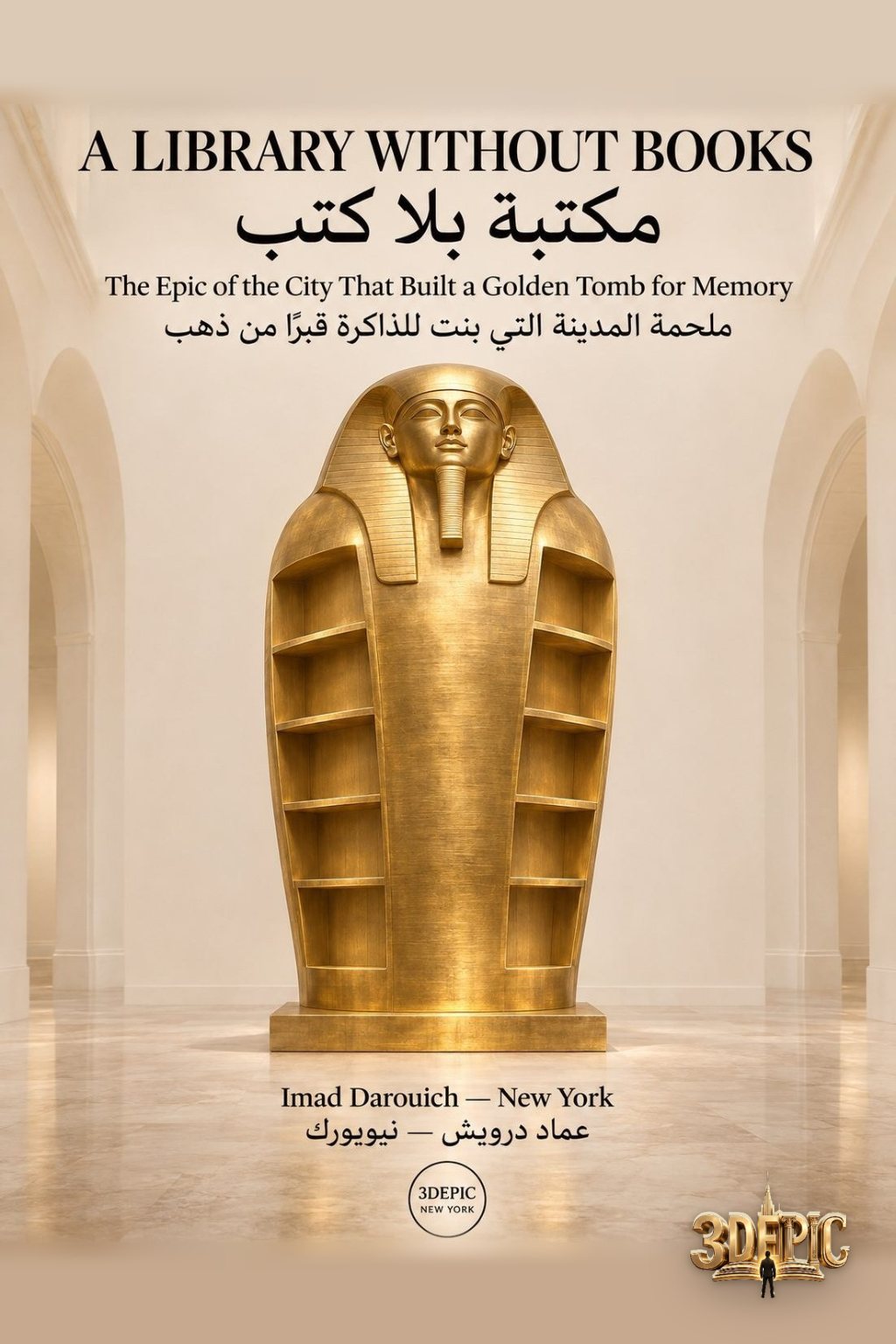
A Library Without Books: The Epic of the City That Built a Golden Tomb for Memory
Al-Farabi: The Virtuous City
Al-Jazari: The Engineer of Wonderful Machines
Al-Khwarizmi: The Man Who Gave Us the Algorithm

Every ebook. Unlimited downloads.

Join from $9/mo