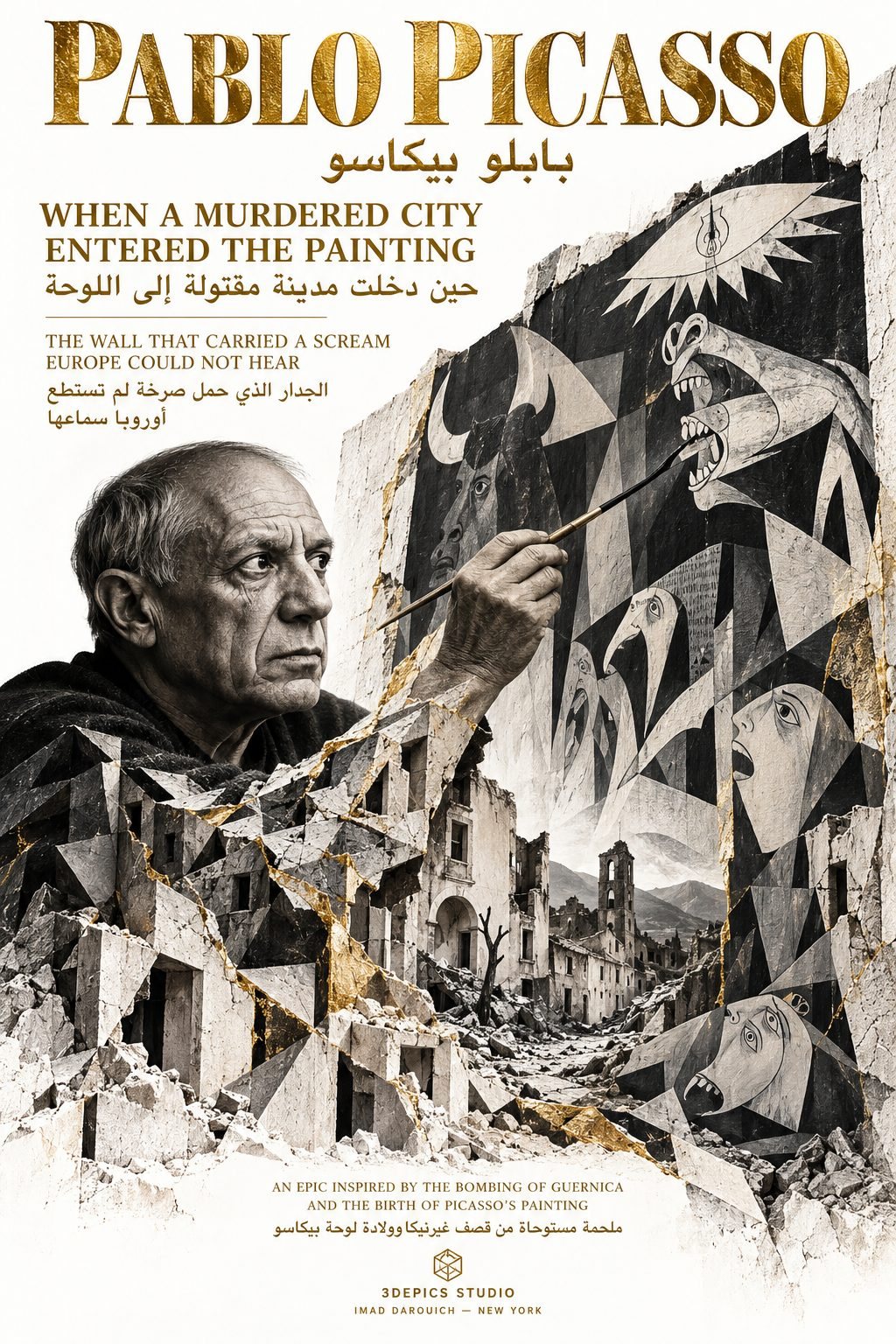
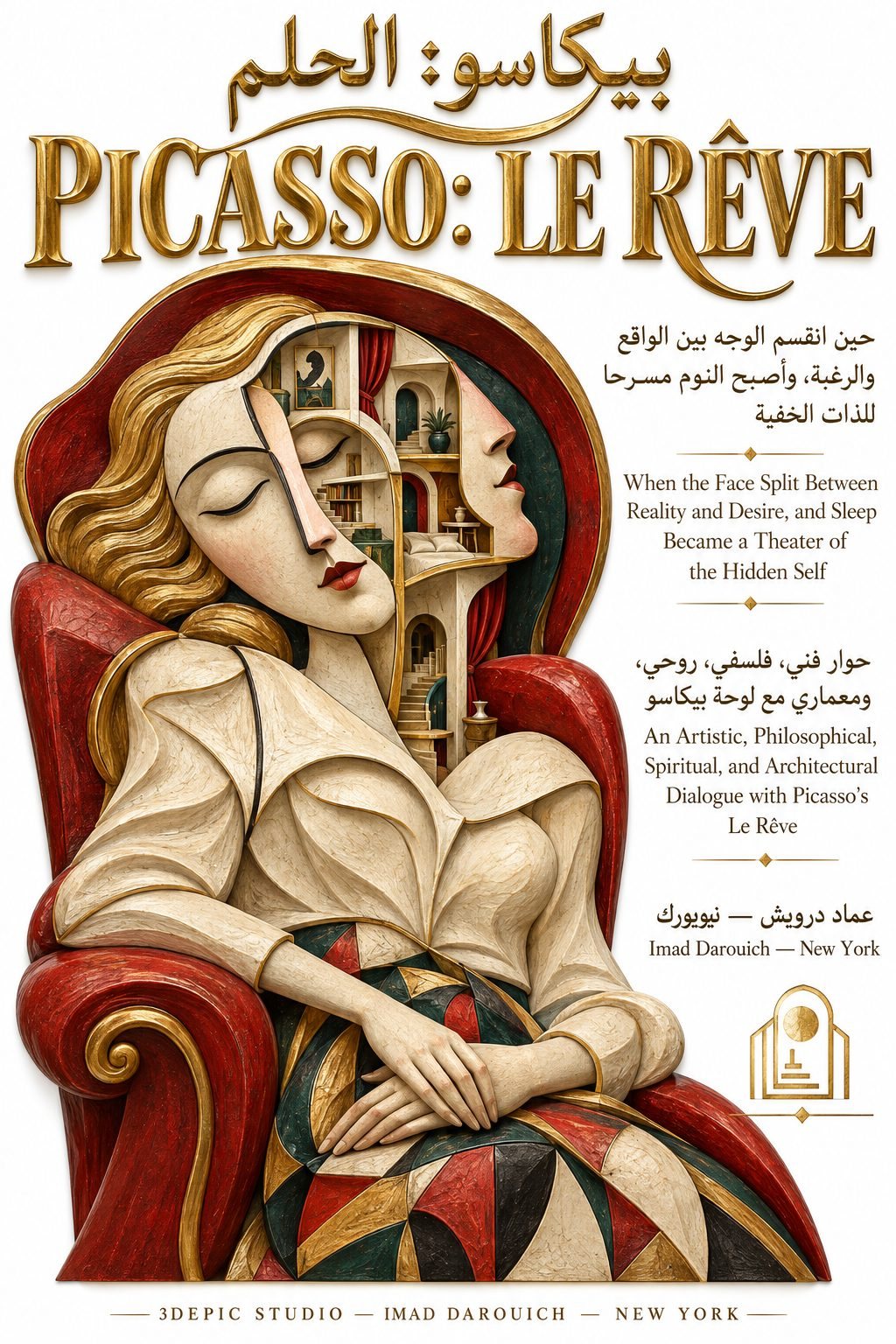
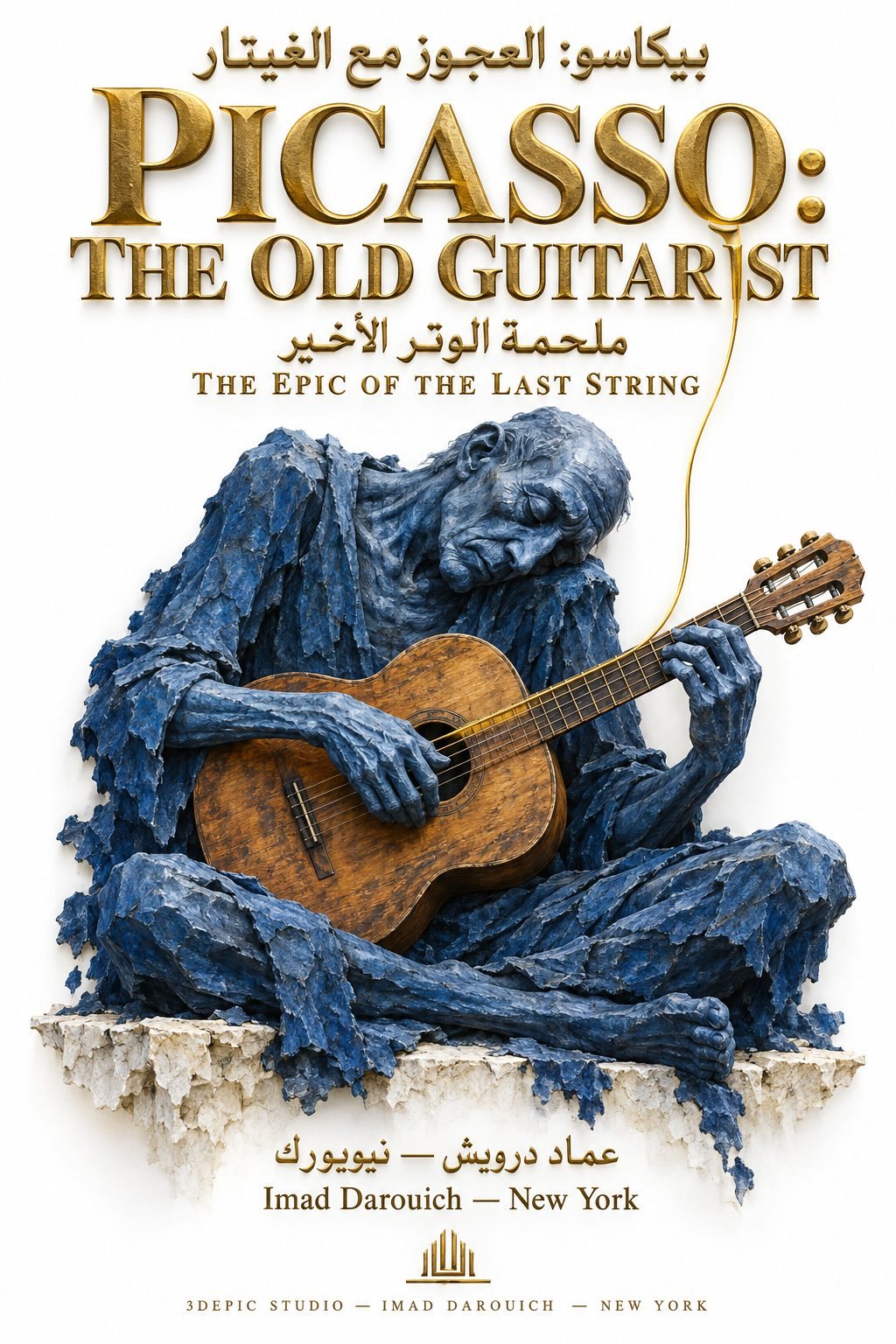
Pablo Picasso: The Eye That Refused to See from One Side is a bilingual ebook in English and Arabic that follows Picasso's work from Málaga to France, read by an architect who asks from which side a viewer enters each picture. It opens with Guernica leaving New York for Madrid after decades away from the country whose town gave it its name, and returns to a boy in his teens painting Science and Charity, a doctor holding a sick woman's wrist beside a nun with a child, a subject his father chose for official exhibitions.
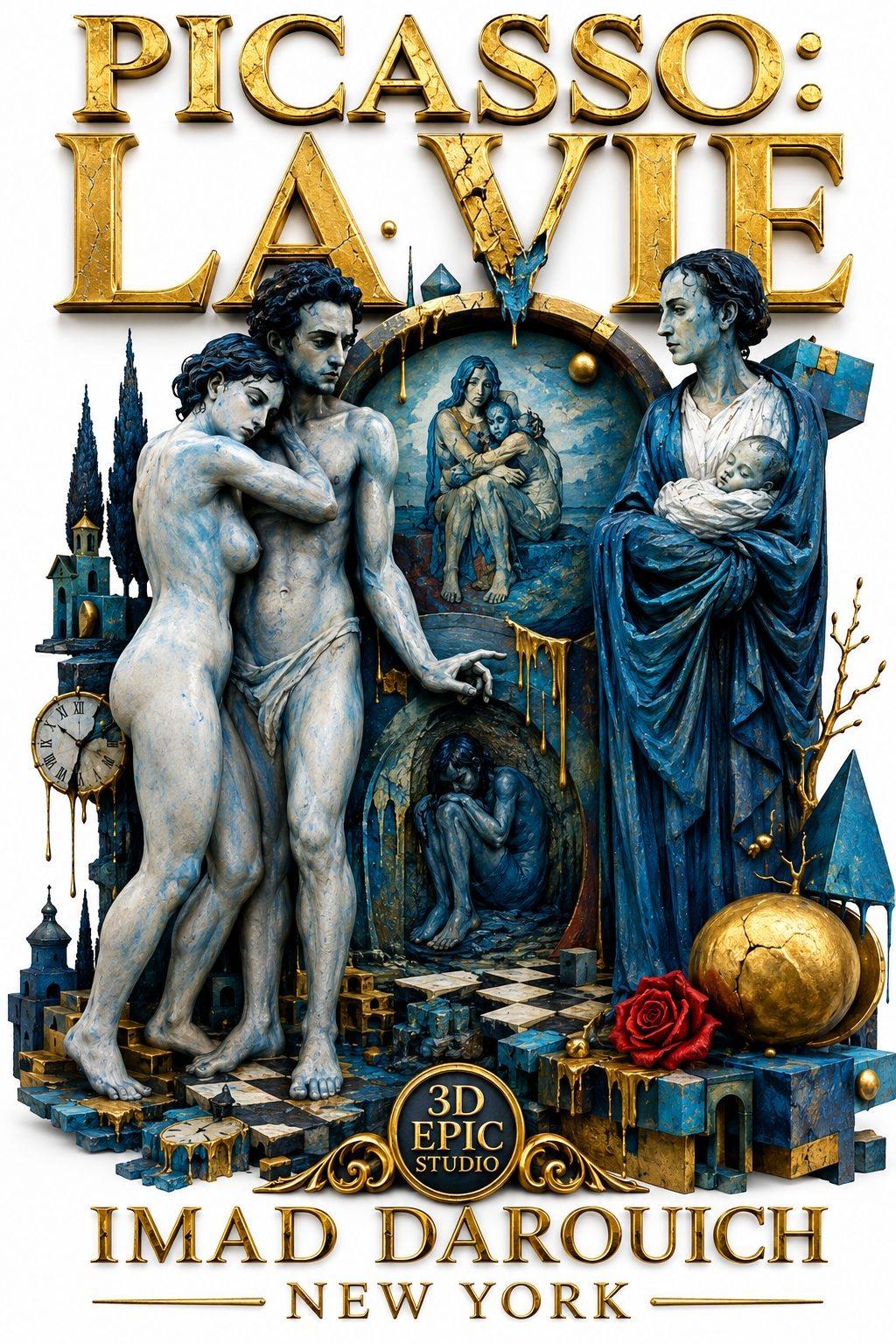
The chapters move through the Blue Period, when Picasso put the face of his friend Carles Casagemas, who had taken his own life, into La Vie, and X-rays revealed an older painting beneath; through Family of Saltimbanques and the portrait of Gertrude Stein; through Les Demoiselles d'Avignon, its women looking back at the viewer and its debt to Iberian and African sculpture brought to Europe along colonial routes; and through Cubism with Georges Braque, read as a question about the viewer's movement, from the portrait of Daniel-Henry Kahnweiler to the rope and oilcloth of Still Life with Chair Caning.
The bombing of Gernika during the Spanish Civil War becomes Guernica for the Spanish Pavilion in Paris, with the woman's lamp and the mother holding her child, photographed in its stages by Dora Maar, whose own work the book also honours. A bicycle seat and handlebars become a bull's head, a printed dove travels onto city walls, ceramics made with the Madoura workshop in Vallauris need the potter's knowledge, Françoise Gilot appears as an artist in her own right, and a long series of variations on Velázquez's Las Meninas enters an old royal room from many directions.
For readers of modern art and Spanish painting, for anyone who has stood before Guernica, and for those who like to walk around a picture before deciding what it shows.