Skip to content
3DEPIC
Cézanne, Still Life with a Curtain: When Fruit Became Architecture
Literature & Art

Cézanne, Still Life with a Curtain: When Fruit Became Architecture

سيزان، الطبيعة الصامتة مع ستارة: حين أصبحت الفاكهة عمارة

By Architect Imad Darouich

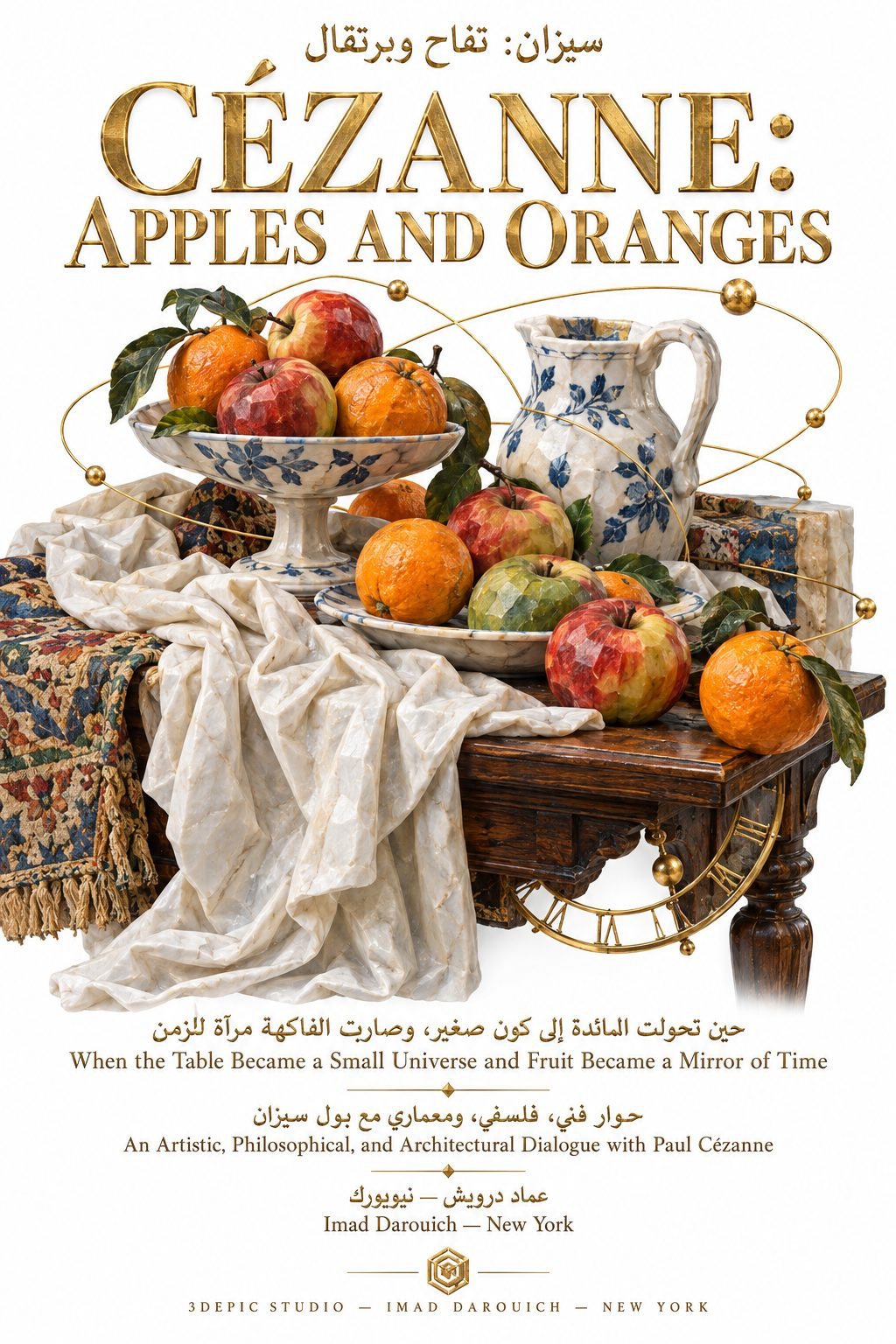
A dialogue with Paul Cézanne's Still Life with a Curtain in which the apples, the white jug, the table, the folded curtain, light and shadow each answer the narrator. It reads the painting as a small city of masses and voids and lets Cézanne himself explain how he built with color.

Format
PDF ebook
Languages
Arabic and English
Collection
Literature & Art

Open the Epic… Let the Story Carry You Beyond.

Own This Epic: Just $5.

One payment. Download it right away, no account needed. PDF · 47 pages.

Or unlock the entire library with your subscription: download every book and discover new epics added each week.

Subscribe from $9 a Month.
Already a member? Sign in to download.

About This Book

Standing before Cézanne's still life, the narrator looks with an architect's eye and sees masses, axes and void before he sees fruit and fabric, and comes to feel that the painter was rebuilding the world on a table. The apples tell him they carry time and the memory of sunlight, and that their beauty hurts because it knows it will wither; the white jug says its strength lies in the void it holds, the oldest architectural lesson on the table; and the table speaks of the tragedy of foundations, which carry everything and are never seen. The heavy curtain will not say what it hides because its task is to remind him that vision is incomplete, its folds call themselves soft architecture, a wall that says perhaps you may pass, the light explains the difference between existence and appearance, and the shadows say they build depth without bricks. The painting then tells the narrator that he is the figure Cézanne did not paint and asks what he will do with this brief life, and Cézanne himself answers that he was building, with color in place of cement. The curtain closes the book by saying it has been open from the beginning, since the true curtain is in the eye, and warns against making a painting speak on behalf of God, leaving the objects where they were and the eye that looked at them changed.

My strength lies in the void I contain.

Humility begins when a person understands that his eye is not the measure of all truth.

He changed the way we see them.

From the book

Share this epic

Reader ratings

5.0 · 1 rating

Readers who have downloaded or bought this book can rate it.

More from this collection

Every ebook. Unlimited downloads.

Join from $9/mo