Somewhere I Can Stop Leaving: A Poem About Hassan Fathy and Home
مكانٌ أتوقّف فيه عن الرحيل
An architect sketches a home for a woman who lost hers, taking his cue from Hassan Fathy's New Gourna and a restored market in Aleppo.
بقلم المهندس المعماري عماد درويش4 دقائق قراءة
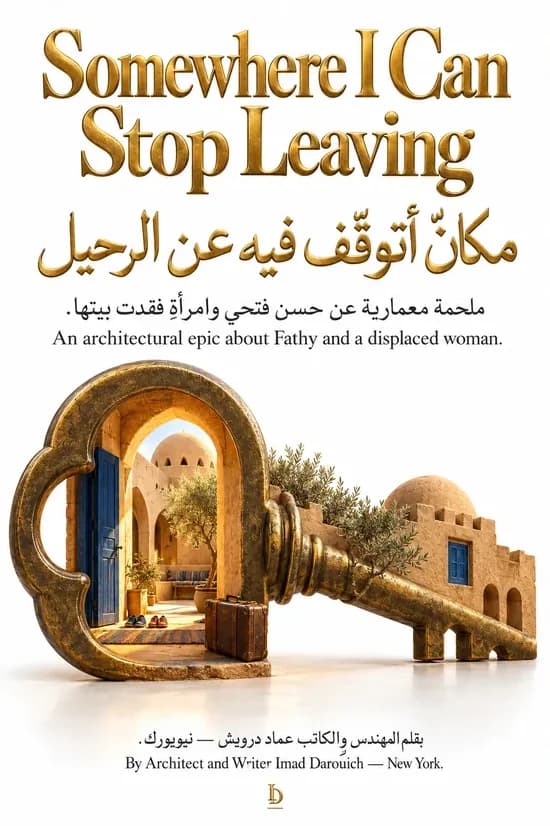
In this poem about Hassan Fathy, Imad sketches a home for an imagined woman who has lost hers, guided by the Egyptian architect who built the village of New Gourna near Luxor in the late 1940s and tried to consult every family it would house. He then turns to Aleppo, where the Aga Khan Trust for Culture has restored sections of the old souk since 2018.
ملحمة معمارية عن حسن فتحي وامرأةٍ فقدت بيتها.An architectural epic about Fathy and a displaced woman.
تنويهA Note
المرأة صورةٌ أدبية، وليست شخصيةً تاريخية محدّدة.The woman is imagined, not a historical individual.
المشروعات والتواريخ موثّقة، والتأمّل المعماري رؤيتي الخاصة.Projects and dates are documented; architectural reflections are mine.
البدايةThe Beginning
بقي المفتاح في يدها، واختفى البيت.The key remained in her hand; home vanished.
تحمله كأنّ الباب سيظهر عند منعطفٍ قادم.She carries it, expecting a door ahead.
كلّ مساءٍ تضعه قرب وسادتها المؤقّتة.Each evening, she places it beside temporary bedding.
وكلّ صباحٍ تبدأ رحلةً لا تريدها.Each morning begins another journey she never wanted.
أنا عماد درويش؛ أتأمّل يدها قبل المفتاح.I am Imad Darouich; I study her hand.
يدٌ تحتاج أن تفتح بابًا وتستريح.A hand needing to open a door and rest.
الملحمةThe Epic
حين أفتح دفتر الرسم، أتذكّر حسن فتحي.Opening my sketchbook, I remember Hassan Fathy.
أستحضر اهتمامه بالسكان، ومعرفتهم بحياتهم اليومية.I recall his concern for residents’ everyday knowledge.
كُلّف بتصميم القرنة الجديدة قرب الأقصر عام 1945.He received the New Gourna commission in 1945.
ودافع عن مشاركة السكان بالتصميم والبناء.He championed residents’ participation in design and construction.
أحمل هذه الفكرة إلى المرأة واحتياجاتها.I carry this idea toward the woman’s needs.
فبيتها القادم يبدأ بمعرفة حياتها أولًا.Her future home begins with understanding her life.
أين ينام أولادها حين يطول الليل؟Where will her children sleep through long nights?
كيف تحفظ خصوصيتها داخل مكانٍ مزدحم؟How can she preserve privacy within crowded shelter?
وكم تستطيع دفعه دون خوفٍ جديد؟How much can she afford without renewed fear?
تصبح هذه الأسئلة أساسًا للرسم أمامي.These questions become the foundation of my drawing.
أرسم غرفةً، وأتخيّل فيها نومًا هادئًا.I draw a room, imagining peaceful sleep.
وأفتح نافذةً يصل صباحها إلى السرير.I open a window bringing morning to bed.
أترك للمطبخ مساحةً تكفي حركة يديها.I give the kitchen room for her movements.
وأجعل المدخل واضحًا، آمنًا، وسهل العبور.I make the entrance clear, safe, and accessible.
تعود الحياة إلى الورقة تفصيلًا بعد تفصيل.Life returns to paper, detail after detail.
تظهر مائدةٌ صغيرة، وتجد الكراسي مكانها.A small table appears; chairs find their places.
على أحدها حقيبةُ طفلٍ عاد من المدرسة.One holds a child’s bag after school.
وفوق الجدار مكانٌ لصورةٍ نجت من الخراب.The wall welcomes a photograph surviving destruction.
أفهم عندها ما تطلبه هذه المرأة.Then I understand what this woman seeks.
مكانًا تستطيع فيه ترك حقيبتها مفتوحة.Somewhere she can leave her suitcase unpacked.
وصباحًا تخطّط فيه ليومها دون الرحيل.A morning she can plan without leaving.
لكنّ الورقة وحدها لا تحمي عائلة.Yet paper alone cannot protect a family.
يحتاج البيت أرضًا يُصان حقّها فيها.A home needs land where her rights endure.
ويحتاج بناءً آمنًا، وماءً، وصرفًا، وطريقًا.It needs safe construction, water, sanitation, and access.
وتحتاج العودة موردًا يستمرّ بعد تسليم المفاتيح.Returning needs income beyond the handing over of keys.
هنا تتّسع مسؤوليتي خارج حدود الجدران.Here my responsibility extends beyond the walls.
أنظر إلى الحيّ الذي سيحتضن بيتها.I consider the neighbourhood embracing her home.
أبحث عن المدرسة، والعيادة، والسوق القريب.I look for schools, healthcare, and nearby markets.
فالبيت يستقرّ حين تسنده حياةٌ حوله.A home settles when surrounding life supports it.
لهذا جمعتُ حسن فتحي وامرأةً فقدت بيتها.This joins Fathy with a woman losing home.
تضع تجربتها الفكرةَ المعمارية أمام امتحانٍ واضح.Her experience gives architectural thought a clear test.
هل يساعدها البناء على استعادة حياتها؟Does construction help her recover her life?
وهل تستطيع البقاء فيه بأمانٍ وكرامة؟Can she remain there safely and with dignity?
من سورياFrom Syria
في حلب، يمنحنا سوق السقطية مثالًا ملموسًا.In Aleppo, Souk al-Saqatiyya offers a tangible example.
اكتمل تأهيله في عام 2019 بشراكةٍ محلية.Its rehabilitation was completed in 2019 with local partners.
شارك صندوق الآغا خان للثقافة بالمشروع.The Aga Khan Trust for Culture participated.
وفي عام 2021، أشادت اليونسكو بجودة ترميمه.In 2021, UNESCO commended its restoration quality.
ثم نجد أثر العمل في حياة صاحبه.Then we find its effect in someone’s life.
محمد نطفجي عاد إلى متجره بعد الترميم.Mohammad Notfaji returned to his shop after restoration.
وتحدّث عن عودة التجارة إلى الانتعاش تدريجيًا.He described commercial activity gradually beginning to revive.
أرى في ذلك درسًا لإعادة البناء السوري.I see a lesson for rebuilding Syria.
ترميم السوق يفتح طريقًا لاستعادة كسب العيش.Restoring markets opens a path toward recovering livelihoods.
ومع الرزق، تصبح إقامة العائلة أكثر إمكانًا.With income, families gain greater possibilities for staying.
تحتاج سوريا بيوتًا ترتبط بهذه الحياة.Syria needs homes connected to this living fabric.
أحياءً يستطيع أهلها العمل والتعلّم داخلها.Neighbourhoods where residents can work and learn.
ومشروعاتٍ تحفظ حقوقهم، وتستمع إلى احتياجاتهم.Projects protecting their rights and hearing their needs.
الخاتمةThe Ending
أعود بخيالي إلى المرأة ومفتاحها القديم.My imagination returns to the woman’s old key.
أراها تصل أمام بابٍ تعرف عنوانه.I see her reach a door with an address.
تفتحه، ويدخل أولادها قبل حقائبهم الثقيلة.She opens it; children enter before heavy bags.
تضع المفتاح قرب النافذة، وتجلس قليلًا.She leaves the key beside the window and sits.
غدًا، تستطيع شراء خبزها من الحيّ.Tomorrow, she can buy bread in her neighbourhood.
ويستطيع أولادها الذهاب إلى مدرستهم القريبة.Her children can attend their nearby school.
أنا عماد درويش؛ لهذه اللحظة أرسم.I am Imad Darouich; I draw for this moment.
حين ينتهي انتظار البيت، وتبدأ الحياة داخله.When waiting ends and life begins within.
The Egyptian architect Abdel-Wahed El-Wakil, from his years with Fathy to building with climate and clay, fills Abdel-Wahed El-Wakil: When Architecture Becomes Memory, in the architects collection, and The Human at the Heart of Design: Organic Architecture as an Invitation to Life returns to New Gourna in ten conversations on organic architecture, in the ideas and philosophy collection.
بقلم
Architect Imad Darouich
المهندس المعماري عماد درويش
مهندس معماري وكاتب ومؤسس 3DEPICS، يقيم في نيويورك. يكتب أدبًا ملحميًا يعبر الحدود واللغات والجغرافيا، حيث تلتقي الفلسفة بالعمارة، والروحانية بالتاريخ، والذاكرة بالخيال.