Central Park: When Trees Defeated Concrete
سنترال بارك: حين انتصرت الأشجار على الإسمنت
As towers climbed, New York planted its heart in the middle of a forest. An architect walks Central Park and counts what cannot be sold.
بقلم المهندس المعماري عماد درويش9 دقائق قراءة
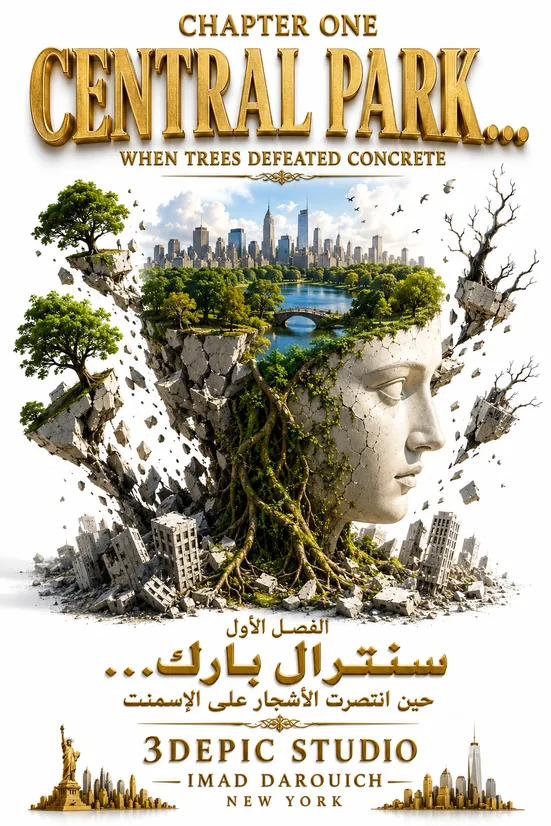
Central Park in Manhattan was designed by Frederick Law Olmsted and Calvert Vaux, whose Greensward Plan won the park's design competition in 1858. Imad's Central Park poem reads it as a covenant between the city and nature: benches that wait for stories, immigrants finding that home can begin under a tree, an old man eating his bread by the lake, and an architect who learns how much earth must be left for life.
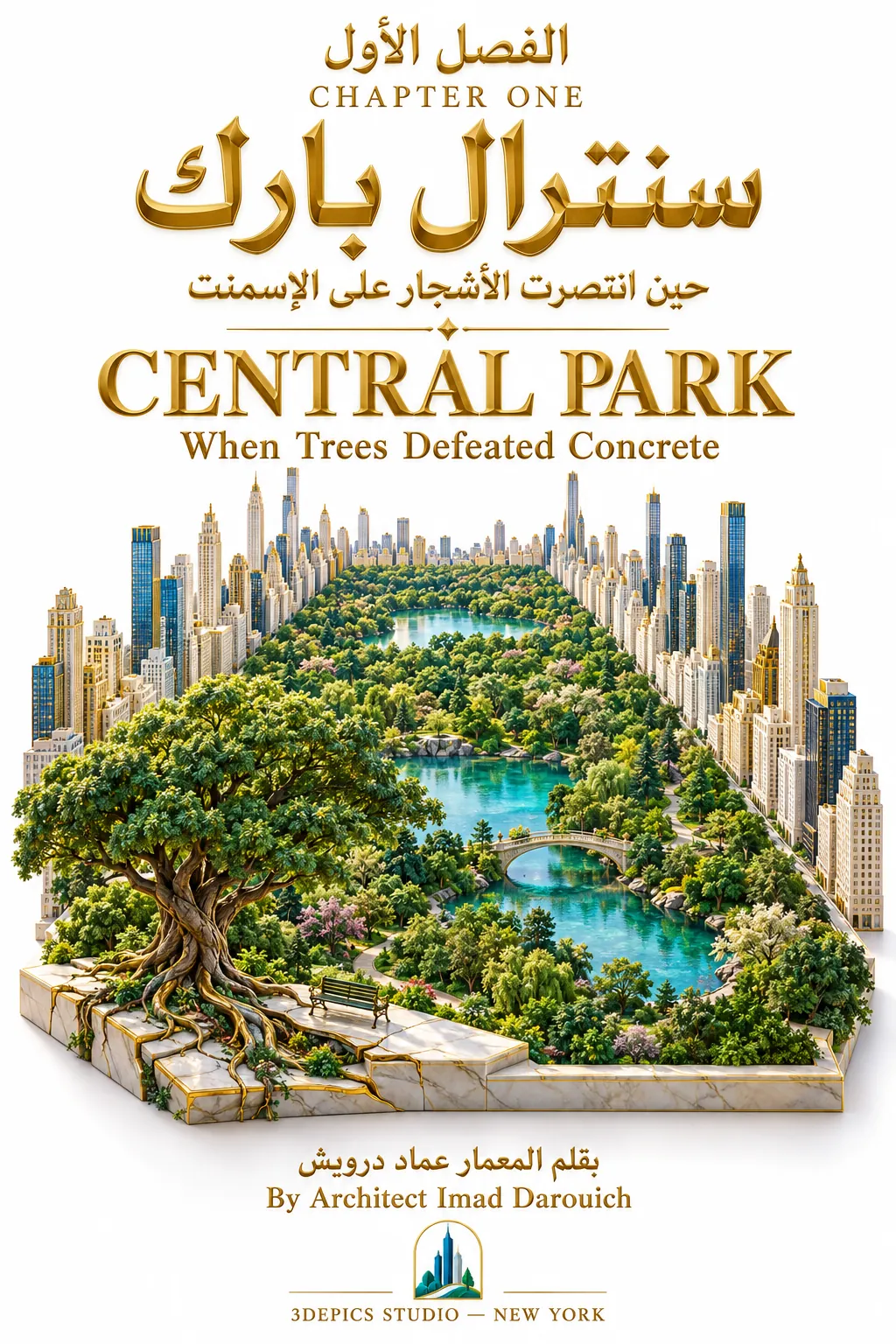
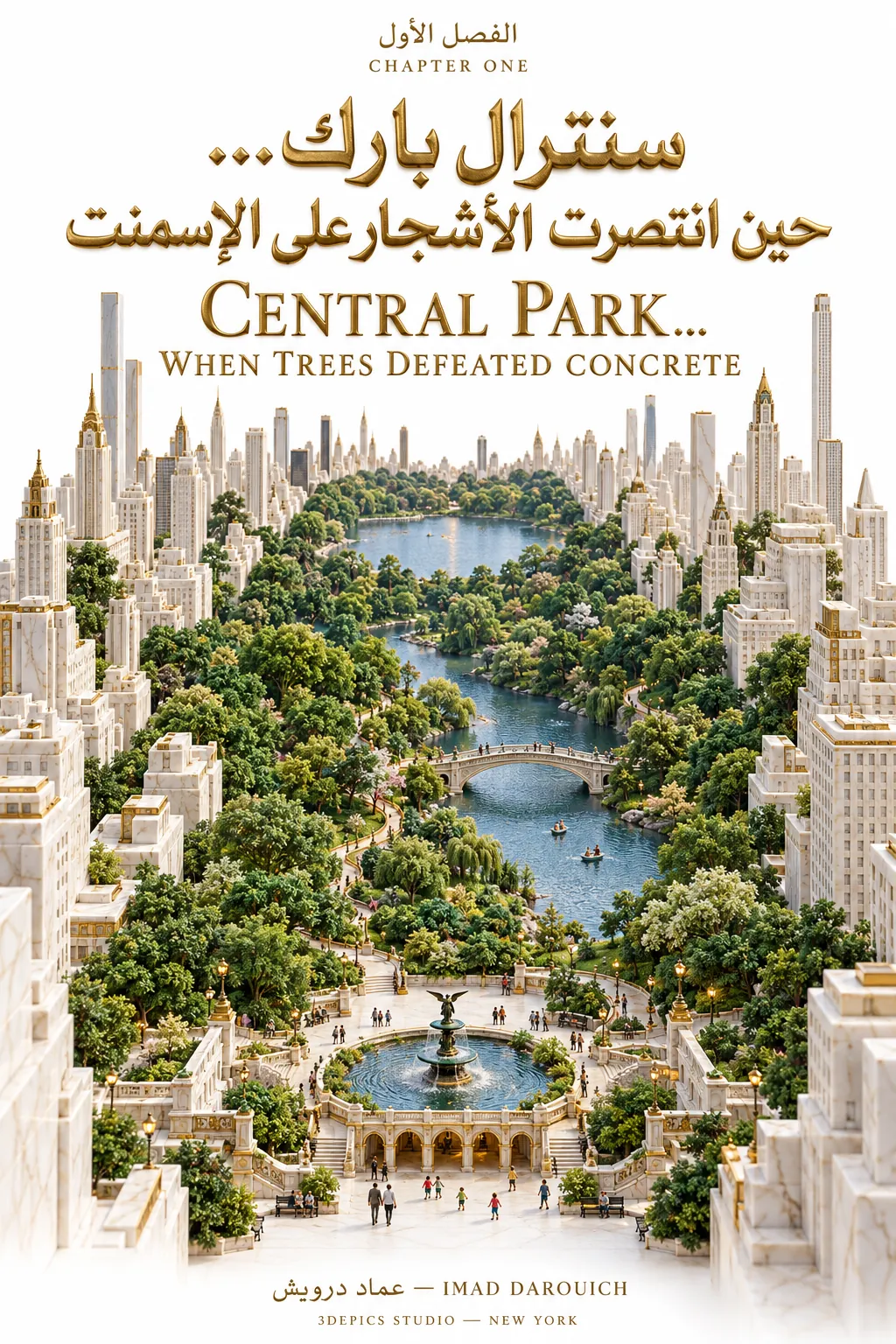
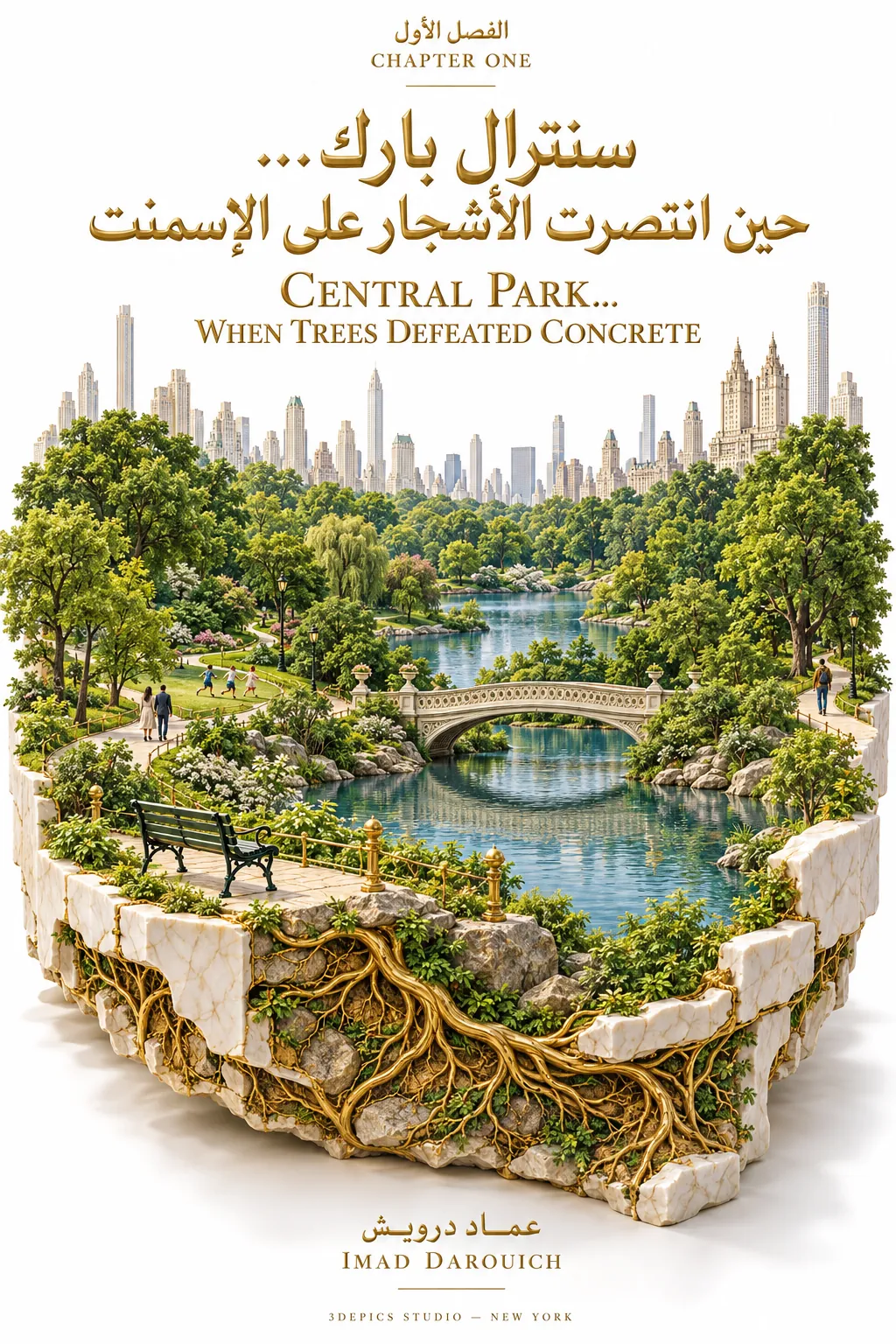
ليست كل المدن تعرف كيف تحافظ على قلبها.Not every city knows how to protect its heart.
لكن نيويورك زرعت قلبها في منتصف الغابة.But New York planted its heart in the middle of a forest.
وحين ارتفعت الأبراج نحو السماء،As skyscrapers climbed toward the sky,
بقيت الأشجار ترفع صلاةً صامتة نحو الخالق.The trees continued offering silent prayers to the Creator.
سنترال بارك ليس مجرد حديقة.Central Park is far more than a park.
إنه اتفاقٌ قديم بين الإنسان والطبيعة.It is an ancient covenant between humanity and nature.
اتفاقٌ يقول إن الحضارة لا تعني اقتلاع الجذور.An agreement declaring that civilization must never uproot its roots.
كل شجرة هنا شاهدةٌ على قرنٍ من الأحلام.Every tree here bears witness to a century of dreams.
وكل بحيرة تحفظ وجوه العابرين.Every lake preserves the faces of those who pass by.
وكل مقعد ينتظر قصةً جديدة.Every bench waits for another story.
رأيت أطفالًا يضحكون.I have seen children laughing.
ورأيت عشاقًا يتعاهدون على العمر.I have seen lovers promising one another forever.
ورأيت مهاجرين يكتشفون أن الوطن قد يبدأ بخطوة.I have seen immigrants discover that home may begin with a single step.
أنا لا أمشي في سنترال بارك.I do not merely walk through Central Park.
أنا أمشي داخل فكرةٍ عظيمة.I walk through a magnificent idea.
فكرةٍ تقول إن المدن العظيمة لا تُقاس بارتفاع أبراجها.An idea that says great cities are not measured by the height of their towers.
بل بقدرتها على حماية ظلِّ شجرة.But by their ability to protect the shade of a single tree.
ولهذا سيبقى سنترال بارك.That is why Central Park will endure.
ليس أجمل مكانٍ في نيويورك فقط.Not merely as New York's most beautiful place.
بل أحد أعظم انتصارات الإنسان على جشع الإنسان.But as one of humanity's greatest victories over its own greed.
Chapter One
دخلتُ سنترال بارك وفي رأسي ضجيجُ مدينةٍ كاملة.I entered Central Park carrying the noise of an entire city in my head.
كانت الأبراج خلفي تتنافسُ على قطعةٍ من السماء،وكان أمامي غصنٌ ينحني ليفسحَ الطريقَ لطائر.
Behind me, towers competed for a piece of the sky; before me, a branch bent to make room for a bird.
توقّفتُ.I stopped.
أنا الذي قضيتُ عمرًا أرسمُ ما يمكنُ أن يرتفع،وجدتُني أتأمّلُ ما يستطيعُ أن يمنحَ الظل.I, who had spent a lifetime drawing what might rise, found myself contemplating what might offer shade.
كانت شجرةٌ تمدُّ أغصانَها فوق مقعدٍ خشبي،وعلى المقعد رجلٌ مُسنٌّ يأكلُ خبزَه ببطء.A tree spread its branches above a wooden bench, where an old man ate his bread slowly.
لم يسألْه الظلُّ عن اسمِه،ولا عمّا بقيَ في حسابِه،ولا عن البلاد التي جاءَ منها.The shade asked neither his name,nor what remained in his account,nor which country he had come from.
اتّسعَ له.It made room for him.
وبقيَ متّسعٌ لآخرين.And there was room for others.
يا نيويورك…كم تحتاجُ المدينةُ من الحكمةكي تتركَ في جسدِها مكانًا لا يُباع.how much wisdom a city needsto leave within its body a place that is not for sale.
مكانًا يأتيه المتعبُ دون موعد،ويجلسُ فيه الفقيرُ دون أن يشتريَ حقَّ الجلوس.A place the weary may enter without an appointment, where the poor need not purchase the right to sit.
في الخارج،واجهةٌ زجاجيةٌ تُعيدُ إليَّ صورتي مسرعًا.Outside,a glass façade reflects my hurried figure.
هنا،سطحُ الماء يُمهلُني حتى أرى وجهي.Here,the water gives me time to see my face.
أقتربُ من البحيرة،فتتفكّكُ الأبراجُ على صفحتِها،وتحملُها تموّجاتٌ صغيرةٌ كأنها تستطيعُ أن تُخفّفَ عن الحجرِ غرورَه.I approach the lake,and the towers break apart upon its surface,carried by small ripples that seem to soften the pride of stone.
تمرُّ بطّةٌ،فيهتزُّ برجٌ كامل.A duck passes,and an entire tower trembles.
أبتسمُ.I smile.
كم يبدو العالمُ أخفَّحين نراهُ من مستوى الماء.How much lighter the world appearswhen seen from the level of the water.
أنا المعماري…أعرفُ إغراءَ الأرضِ حين تكونُ خالية.I am an architect…I know the temptation of an open plot of land.
أعرفُ كيف تبدأُ الحسابات:كم طابقًا يحتملُ هذا الموقع؟وكم نافذةً يمكنُ أن نفتحَ نحو الحديقة؟I know how the calculations begin:How many floors can this site support?How many windows could overlook the park?
لكنني أسألُ هنا:وكم نافذةً يحتاجُ الإنسانُ داخلَ نفسِه؟But here I ask:How many windows does a person need within?
وكم سنةً يعملُ تحتَ سقف،قبل أن ينتبهَ إلى حاجتِه لغيمة؟How many years does someone work beneath a ceiling before noticing the need for a cloud?
أمدُّ يدي إلى جذعٍ خشن.I reach toward a rough tree trunk.
تحتَ أصابعي شقوقٌ لا تشبهُ خطوطَ مخطّطاتي.Beneath my fingers are fissures unlike the lines in my drawings.
هذا نموٌّ مرَّ من هنا.Growth has passed this way.
وهذا موضعُ غصنٍ انكسر،ثم واصلتِ الشجرةُ حياتَها حولَ الجرح.Here a branch broke,and the tree continued its life around the wound.
أُطيلُ الوقوفَ عند تلك الندبة.I linger over that scar.
ثمةَ معرفةٌ يحتاجُها مَن فقدَ بيتًا،ومَن حملَ بلادَه في صدرِه،ومَن ظنَّ أن ما انكسرَ فيه سيمنعُه من الاخضرار.There is knowledge here for someone who has lost a home, who has carried a country in his chest,
who believed that what had broken within him would keep him from growing green again.
أتركُ يدي على الجذعِ قليلًا.I leave my hand against the trunk a little longer.
يا ربّ…امنحْ قلوبَنا شيئًا من صبرِ هذه الشجرة.My Lord…grant our hearts something of this tree’s patience.
على العشب،يفتحُ طفلٌ ذراعَيه ويركض.On the grass,a child opens his arms and runs.
تُناديه أمُّه،فيلتفتُ نحوها بوجهٍ يفيضُ بالنهار،ثم يُكملُ مطاردةَ شيءٍ لا أراه.His mother calls;he turns toward her with a face full of daylight,then resumes chasing something I cannot see.
ربما فراشة.Perhaps a butterfly.
ربما تلك السعادةُ التي نفقدُهاحين نُصرُّ على معرفةِ وجهةِ كلِّ خطوة.Perhaps the happiness we losewhen we insist on knowing where every step will lead.
أراقبُه وأفكّرُ:كم من طفلٍ يسكنُ مدينةً واسعة،ولا يجدُ مكانًا يركضُ فيه دون خوف.I watch him and think:How many children live in vast citieswithout a place to run freely.
وكم من مخطّطٍ جميلٍ أغفلَ هذه المسافة الصغيرةبين ذراعَي طفلٍ مفتوحتين.How many beautiful plans have overlooked that little span between a child’s outstretched arms.
في دفاتري،أقيسُ الممرّاتِ بالأقدام والأمتار.In my notebooks,I measure paths in feet and meters.
أمّا هنا،فأقيسُ المكانَ بما يسمحُ للحياةِ أن تفعل.Here,I measure a place by what it allows life to do.
هل يستطيعُ الطفلُ أن يركض؟Can a child run?
هل تستطيعُ أمُّه أن تراهُ وهي مطمئنّة؟Can his mother watch without fear?
هل يجدُ الشيخُ مقعدًا قبل أن تخذلَه ركبتاه؟Can an old man find a bench before his knees give way?
هذه أسئلةٌ أحملُها معيكلّما عدتُ إلى طاولةِ الرسم.These are questions I carry backwhenever I return to the drawing table.
وفي ممرٍّ آخر،يعزفُ رجلٌ وحيد.Along another path,a man plays music alone.
أمامَه حقيبةٌ مفتوحة،وفيها قطعٌ نقديةٌ قليلة.An open case lies before him,holding a few coins.
تخرجُ النغمةُ من بين يدَيه،وتعبرُ الممرَّ دون أن تعترضَها لغة.A melody rises from his handsand crosses the path unhindered by language.
تُبطئُ امرأةٌ خطواتِها.A woman slows her steps.
يرفعُ طفلٌ رأسَه.A child looks up.
وأنا…تصلُني النغمةُ من مكانٍ بعيدٍ في الذاكرة.And I…hear the melody arrive from somewhere distant in memory.
أتذكّرُ ماءً في فناء،وبابًا قديمًا،وصوتًا يناديني من داخلِ البيت.I remember water in a courtyard,an old door,a voice calling me from inside the house.
أقفُ في نيويورك،ويُفتحُ في صدري ممرٌّ إلى دمشق.I stand in New York,and a passage to Damascus opens within my chest.
أتركُ للحنِ أن يُكملَ طريقَه.I let the melody continue its journey.
بعضُ المسافاتِ تحتاجُ إلى أغنيةكي نستطيعَ عبورَها.Some distances need a songbefore we can cross them.
ثم يأتي الخريف.Then autumn comes.
تتبدّلُ الأوراقُ فوق الممرّات،ويصيرُ للضوءِ طعمُ النحاسِ والعسل.Leaves change above the paths,and the light takes on the warmth of copper and honey.
أمشي فوق ما أسقطتْه الأشجار،وأسمعُ تحتَ حذائي هشاشةَ موسمٍ كامل.I walk upon what the trees have shed,hearing beneath my shoes the fragile remains of a season.
ورقةٌ تتعلّقُ بمعطفي.A leaf catches on my coat.
أحملُها بين أصابعي،وأتأمّلُ عروقَها الدقيقة.I hold it between my fingersand study its delicate veins.
كلُّ هذا النظامفي شيءٍ سيمضي مع الريح.All this intricate orderin something the wind will carry away.
أفكّرُ في الواجهاتِ التي أردنا لها الخلود،وفي أسماءٍ حفرناها عميقًاخوفًا من أن ينساها أحد.I think of façades we wanted to last forever,of names carved deepfor fear they might be forgotten.
ثم أرفعُ عيني إلى الأغصان.Then I look up at the branches.
تتركُ الشجرةُ أوراقَها تمضي،وتدخلُ الشتاءَ بما يكفيها للبقاء.The tree lets its leaves goand enters winter with what it needs to survive.
يا لصعوبةِ هذه الحكمةعلى قلبٍ يريدُ أن يحتفظَ بكلِّ شيء.How difficult such wisdom isfor a heart that wants to keep everything.
أعرفُ أن وراءَ الأشجار مدينةً قاسية.I know a hard city waits beyond the trees.
ثمةَ إيجارٌ يستحقُّ آخرَ الشهر،ورسالةٌ يخشى صاحبُها أن يفتحَها،ورجلٌ يبحثُ عن عملٍ منذ أسابيع.There is rent due at the end of the month,a letter someone is afraid to open,a man who has searched for work for weeks.
الحديقةُ لا تدفعُ عنه،ولا تُعيدُ إليه ما فقد.The park cannot pay his billsor return what he has lost.
لكنّها تمنحُه مقعدًا،وساعةً يستطيعُ فيها أن يجمعَ نفسَهقبل أن يخرجَ إلى المحاولةِ من جديد.But it offers him a bench,an hour in which to gather himselfbefore going out to try again.
وقد يحتاجُ الإنسانُ إلى هذه الساعةكي ينجو من يومِه.A person may need that hourto make it through the day.
أفكّرُ فيه،وفي المدنِ التي تُحسنُ استقبالَ السيارات،وتتركُ المتعبَ واقفًا.I think of him,and of cities that make ample room for carswhile leaving the weary standing.
وأتمنّى لو يبدأُ كلُّ مشروعٍ عمرانيٍّبإنسانٍ يجلسُ أمامَنا ويقول:أنا أيضًا سأعيشُ هنا.I wish every urban project could beginwith someone sitting before us and saying:I, too, will live here.
وقبيلَ المغيب،يمتدُّ ظلُّ الأشجار حتى يلامسَ الطريق.Near sunset,the trees stretch their shadows toward the street.
تعودُ الأبراجُ إلى الظهورِ بين الأغصان،وتُضاءُ نافذةٌ،ثم أخرى،ثم تتناثرُ النوافذُ في العلوّ.The towers emerge again between the branches;one window lights up,then another,until windows scatter their light across the heights.
أقفُ عند حافةِ الحديقة،بين وقعِ الخطواتِ وحفيفِ الأوراق.I stand at the edge of the park,between footsteps and rustling leaves.
خلفي مكانٌ أبطأَ نبضَ قلبي،وأمامي مدينةٌ تنتظرُ أن أعودَ إلى سرعتِها.Behind me is a place that slowed my heartbeat;before me, a city waiting for me to match its pace again.
أُخرجُ دفتري،وأرسمُ شجرةً.I take out my notebookand draw a tree.
أتركُ حولَها فراغًا واسعًا.I leave generous space around it.
ثم أبدأُ برسمِ المبنى.Then I begin to draw the building.
فقد تعلّمتُ هنا أن للأرضِ سكّانًايسبقونَ الجدران،وأن عليَّ أن أُصغي إليهمقبل أن أرسمَ الخطَّ الأول.For here I have learned that the earth has inhabitants who come before the walls,and that I must listen to thembefore drawing the first line.
يا نيويورك…احفظي هذا المتّسع.protect this room to breathe.
احفظيهِ للطفلِ الذي لم يولدْ بعد،وللعابرِ الذي سيصلُ غدًا بحقيبة،وللرجلِ الذي سيحتاجُ يومًا إلى ظلٍّكي يتذكّرَ كيف ينهض.Keep it for the child not yet born,for the stranger arriving tomorrow with a suitcase,for the man who will one day need shadeto remember how to rise.
وحين يسألونني:ماذا أعجبتَ في هذه المدينة؟And when they ask me:What did you admire in this city?
سأذكرُ أبراجَها وجسورَها،ثم أفتحُ دفتري عند تلك الشجرة.I will speak of its towers and bridges,then open my notebook to that tree.
وأقول:هنا…عرفتُ كم ينبغي أن نتركَ من الأرضِ للحياة،قبل أن نملأَها بأسمائِنا.And I will say:Here…I learned how much earth we must leave for life before filling it with our names.
عماد درويش، معماري
New York is walked neighbourhood by neighbourhood in The Epic of New York: Every Neighborhood Answers Differently and in The Epic of New York: Learning to Stand Inside Another City.
بقلم
Architect Imad Darouich
المهندس المعماري عماد درويش
مهندس معماري وكاتب ومؤسس 3DEPICS، يقيم في نيويورك. يكتب أدبًا ملحميًا يعبر الحدود واللغات والجغرافيا، حيث تلتقي الفلسفة بالعمارة، والروحانية بالتاريخ، والذاكرة بالخيال.