The Space That Made Room for My Step: Alvar Aalto and Henry Moore
الفراغُ الذي اتّسع لخطوتي
From the curved edge of a wooden seat to the opening through a bronze, an architect relearns scale and draws a bench beneath a window onto a tree.
بقلم المهندس المعماري عماد درويش4 دقائق قراءة
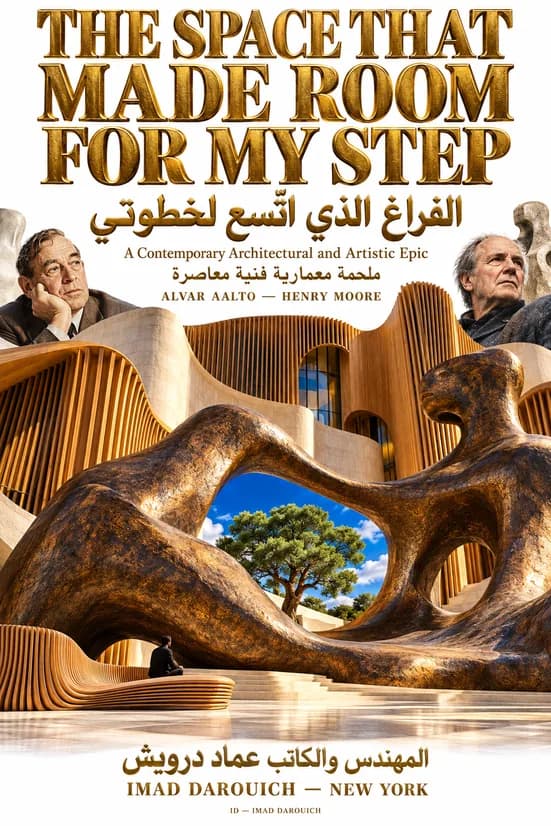
Alvar Aalto (1898-1976) was a Finnish architect and designer whose bent plywood furniture shaped modern design, and Henry Moore (1898-1986) was an English sculptor whose reclining bronze figures are often pierced with openings. Imad's prose poem on Alvar Aalto and Henry Moore follows an architect's hand from the curved edge of a wooden seat to the hole through a sculpture, and asks how a plan can leave people free to choose where to sit.
A Note
تنويه
رؤيا أدبية تستلهم عمارة ألفار آلتو ونحت هنري مور؛ الصور والتأويلات للكاتب، وليست أقوالًا منسوبةً إليهما.A literary vision inspired by Alvar Aalto’s architecture and Henry Moore’s sculpture; its imagery and interpretations belong to the writer and are not quotations attributed to them.
The Introduction
المقدمة
أنا عماد درويش.I am Imad Darouich.
حين أرسم مقعدًا، أتخيّل الظهرَ الذي سيستند إليه.When I draw a seat, I imagine the back that will lean against it.
وحين أرسم جدارًا، أتخيّل الجسدَ الذي سيعبر بجواره.When I draw a wall, I imagine the body that will pass beside it.
للإنسان هيئةٌ في المخطّط.The human being has a shape upon the plan.
لكنّ تعبه يصل بأبعادٍ أخرى.Yet weariness arrives with other dimensions.
من هنا أضع يدي على الخشب، وأرفع عيني إلى الحجر.From here I place my hand upon wood and raise my eyes toward stone.
The Epic
الملحمة
عند آلتو، أرى الصلابةَ تتعلّم الانحناء.With Aalto, I see rigidity learning to bend.
ينثني الخشب.Wood bends.
وتصبح الحافّةُ أقدرَ على استقبال الجسد.And the edge grows more able to receive the body.
أمرّر كفّي عليها.I run my palm along it.
أفكّر في مقدار المعرفة الذي يحتاجه سطحٌ كي يبدو بسيطًا.I think of how much knowledge a surface needs to appear simple.
للانحناءة ذاكرةُ مادّة.The curve holds the material’s memory.
أليافٌ عرفت اتجاهَها، ويدٌ احترمت حدودَها.Fibers whose direction was understood, and a hand that respected their limits.
ثم تمتدّ هذه العنايةُ إلى الغرفة.Then this care extends into the room.
ضوءٌ يصل إلى موضع القراءة.Light reaching the place of reading.
وهواءٌ يتحرّك.And air moving.
ومقياسٌ يجعل الجلوسَ أمرًا طبيعيًّا، بلا صراعٍ مع المكان.And a scale that makes sitting natural, without a struggle against the place.
أريد أن أتعلّم هذه القوّة الهادئة.I want to learn this quiet strength.
أن يعرف الإنسانُ جودةَ العمارة من راحته فيها.That a person might know architecture’s quality through comfort within it.
ثم أقف أمام هنري مور.Then I stand before Henry Moore.
كتلةٌ تستلقي.A mass reclines.
وفي قلبها فتحة.At its heart, an opening.
أقترب، فتدخل الشجرةُ البعيدة في جسد المنحوتة.I approach, and the distant tree enters the sculpture’s body.
أتحرّك قليلًا، فتظهر السماءُ مكانها.I move a little, and the sky appears in its place.
البرونزُ ثابت.The bronze is still.
لكنّ ما يحتضنه يتغيّر مع خطوتي.Yet what it holds changes with my step.
هنا يصبح الفراغُ جزءًا من الهيئة.Here, emptiness becomes part of the form.
له حافّةٌ وظلّ.It has an edge and a shadow.
وله قدرةٌ على وصل القريب بالبعيد.And the power to connect what is near with what is far.
أتأمّل الفتحة طويلًا.I contemplate the opening for a long time.
كم جدارًا رسمتُه، وكان يمكن أن يمنح العالمَ طريقًا عبره؟How many walls have I drawn that could have given the world a passage through them?
وكم كتلةً أثقلتُها بما لا تحتاج إليه؟How many masses have I burdened with what they did not need?
بين خشب آلتو وبرونز مور، أشعر بأن يدي تعيد تعلّم المقياس.Between Aalto’s wood and Moore’s bronze, I feel my hand learning scale anew.
أبدأ من الكفّ.I begin with the palm.
ثم الذراع.Then the arm.
ثم الجسدِ كاملًا حين يتوقّف.Then the whole body as it pauses.
وأترك أمامه مساحةً يختار فيها اتجاهَه.And I leave before it a space in which to choose its direction.
فالحركةُ التي أُجبر عليها تختلف عن الخطوة التي أختارها.A movement forced upon me differs from a step I choose.
أريد للمكان أن يمنح هذا الاختيار.I want the place to offer that choice.
قربَ الضوء، أو في الظلّ.Near the light, or in the shade.
مع الآخرين، أو على مقعدٍ جانبي.With others, or upon a bench to the side.
تحت السقف، أو عند الحديقة.Beneath the roof, or beside the garden.
هذه الحرّيّة الصغيرة تحتاج إلى رسمٍ دقيق.This small freedom needs precise drawing.
ومادّةٍ تُحسن ملامستنا.And a material that knows how to touch us.
The Ending
الخاتمة
يا ربّ، امنح أيدينا عنايةً تبقى في الأشياء بعد أن نتركها.O Lord, give our hands a care that remains in things after we leave them.
من آلتو، أتأمّل سطحًا يقترب من الجسد.Through Aalto, I contemplate a surface drawing close to the body.
ومن مور، أتأمّل كتلةً تفتح داخلها مكانًا للعالم.Through Moore, I contemplate a mass opening a place within itself for the world.
ثم أعود إلى جدارٍ في مخطّطي.Then I return to a wall in my plan.
أفتح فيه موضعًا للنظر.I open a place within it for the gaze.
وتحت الفتحة، أرسم مقعدًا خشبيًّا.Beneath the opening, I draw a wooden seat.
أهذّب حافّته.I refine its edge.
وأتخيّل شخصًا يجلس.I imagine someone sitting down.
يضع يدَه، فيطمئنّ إلى الملمس.They rest a hand and find comfort in the touch.
ويرفع رأسَه، فتظهر شجرة.They raise their head, and a tree appears.
عندها تكتمل المسافةُ بين ما بنيتُه، وما تركتُه مفتوحًا.Then the distance becomes complete between what I built and what I left open.
Aalto's buildings, from Paimio Sanatorium to Finlandia Hall, fill Alvar Aalto: The Architect Who Brought Humanity Back to Modernism. Imad pairs an architect with a sculptor again in The Stone That Released a Wing, and more lives are in the architects collection.
بقلم
Architect Imad Darouich
المهندس المعماري عماد درويش
مهندس معماري وكاتب ومؤسس 3DEPICS، يقيم في نيويورك. يكتب أدبًا ملحميًا يعبر الحدود واللغات والجغرافيا، حيث تلتقي الفلسفة بالعمارة، والروحانية بالتاريخ، والذاكرة بالخيال.